

Experiencing the magic at Daniel's Den
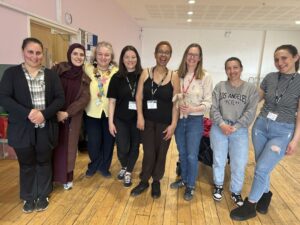
On 15 April, I was lucky enough to visit 4in10 member Daniel’s Den. I was welcomed to their regular Wednesday morning play group at Chalkhill Community Centre in Wembley Park, Brent.
When I arrived, the session was in full swing, in a lovely bright room, full of mums, dads and their small children playing happily. I met new mums with very small babies being warmly welcomed to their first session alongside mums who told me that they had come to Daniel’s Den with older siblings and couldn’t wait to return with new additions to their families.
The session was led by the indefatigable Hermina, who effortlessly balanced registering new families, mixing playdough, and explaining to me how the group operates—all without missing a beat. She was supported by a dedicated team of volunteers, many of whom had attended the group themselves when their children were younger, and who now offer invaluable peer support to those attending.
Many families at Daniel’s Den have direct experience of child poverty. Some are single-parent families; others are migrants with no recourse to public funds. Some are young mothers, some are living in temporary accommodation, and others have experienced domestic violence. Whatever their circumstances, the atmosphere in the room was one of safety, warmth and mutual support, a place where families could spend relaxed, fun time with their children, fostering learning, play and connection. After a healthy snack for the children and tea and coffee for the adults, the session ended with a singing, watching the children bounce along to “Sleeping Bunnies” was undoubtedly a highlight of my visit.
After the session I had the chance to catch up with Jo Gordon, CEO and founder of Daniel’s Den. She told me about how she set up Daniel’s Den over thirty years ago when she had her own son, and how it has grown from that one initial weekly group to tweleve groups running each week across eleven venues. On top of this Jo also now coordinates a network of Parent and Toddler Groups across London and has recently been working in partnership with Brent Council on the ‘Brent Babies’ project to make sure that the services being offered to families through the new Family Well-being Centres are made accessible to all families in the borough, including those supported by Daniel’s Den.
Services such as those offered by Daniel’s Den and other voluntary and community sector groups are the absolute bedrock of the early years eco-system in our city. I often sit in rooms with policy makers and professionals who grapple with the question of how to how to better engage families in early years provision and family support. The answers I believe, lie firmly in spaces such as those created by Daniel’s Den, where staff, volunteers and fellow parents and carers are able to build trust and relationships that can act as a bridge into other parts of the eco-system, where families may initially be more hesitant to go.
The problem is not everyone in our city has access to these amazing groups - one mum had walked over an hour across the borough to come to the session I attended, as she could not afford the bus fare. And many of the groups that do exist are already beyond stretched. They could offer twice as many places, if they had more funding, and would still have to turn people away. It is not possible to expect the jam to be spread ever thinner and for those who run these organisations to give their time and knowledge to help develop services such as the new Family Hubs, without recognising their invaluable contributions and supporting it with long-term sustainable funding.
The Opportunities Mission which is led by the Greater London Authority and London Councils supported by key partners including the VCSE (which I help to represent on the board) aims to ensure all children in London begin year 1 at primary school ready to learn and thrive – aligning with the Government’s own Opportunity Mission and Best Start in Life Strategy. The Mission represents a chance for us to make the case for groups such as Daniel’s Den and put them at the heart of delivering the mission.
There is a sort of magic taking place at Daniel’s Den, not a flashy, whizzy type of magic but the more everyday kind that is created in communities, when people come together in tough times to support one another without judgement and with love and care. And it is the people, Jo and her team that make it happen – we need to get behind them (and all the others I know doing similar work in local organisations across the 4in10 Network) if we are to truly improve the lives of the 800,000 children living in poverty in London.
Katherine visited Daniel's Den on 15 April 2026.


The tragic relationship between child poverty and homelessness in London

Photo by Pedro Ramos on Unsplash
The threat of homelessness is an extremely visceral fear. The lack of a safe place to sleep, eat, shelter from poor weather and gather with those closest to us should be a basic right that every individual sees realised. However, for thousands of children their home is just a hope. In the meantime, they might sleep in mouldy, cold rooms, while sometimes sharing a hotel bed with several siblings with nowhere to play or do homework.
At the end of February this year, the government released new statistics for July to September 2024 showing that 70,450 households in London are in Temporary Accommodation. Focusing exclusively on all households with children across the country in TA, 58% are in London alone. As Shelter, recently highlighted, 164,040 children are currently in TA and 92,850 or nearly 3 in 5 children in TA are in London. These children are not well captured in HBAI data, which is used to create child poverty statistics for the country. That could mean that nearly tens of thousands of children are missing from the estimated 700,000 children believed to be in poverty across the capital. We also know that children are being moved outside of their local borough or even outside of the city entirely, but we don’t know how many.
With the equivalent of one child in every classroom in London currently living in temporary accommodation, and 14,885 young people presenting as homeless to their local council across the city in 2023-24 figures, it is clear that all levels of government across London must take the intersection of the housing crisis and child poverty very seriously.
Gathered evidence shows that child poverty can be a predictor for adult homelessness and is almost always a co-existing reality for families facing the threat of homelessness.
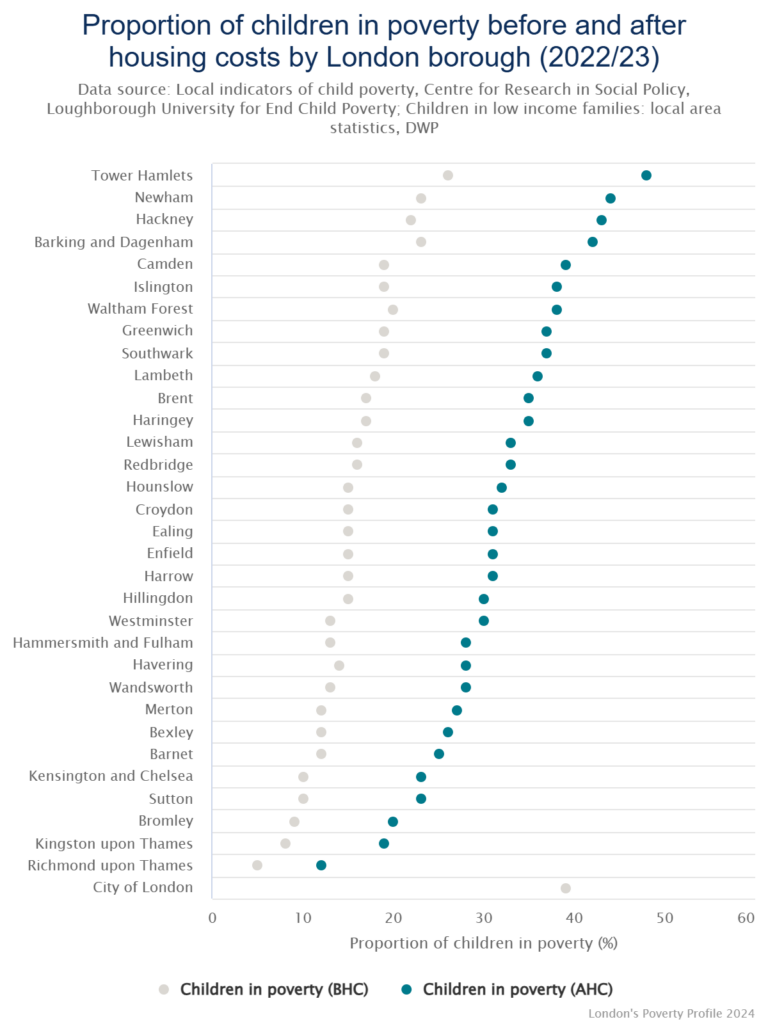
Trust for London’s 2022/23 data on child poverty rates after housing costs show significant jumps when housing costs are accounted for as the chart below shows. The affordable housing crisis in London and the hundreds of thousands of children experiencing poverty must be viewed in tandem. If we want to seriously prevent child poverty from causing long-term harm to children, we need to build appropriate, truly affordable homes fit for families who live in our community urgently.
The challenge though to quickly improve the lives of families is to provide the services they need when the threat of homelessness first looms. There are particular groups who face specific barriers when navigating personal crisis. For a parent who is threatened with domestic violence or a single parent with threats from debt collectors or joblessness due to unpaid caring responsibilities, holistic support is needed to help prevent and reduce the likelihood that they are unable to stay or move into a permanent home quickly. Other families are essentially forced into homelessness after their application for asylum is approved and they’re granted refugee status. These families often have little to no social and financial capital. Those still in a visa application process also face costly fees and limited social security support should they need it. And if a person has grown up in poverty and either loses their home or must leave their current place as a young person, their age may limit both their eligibility for support and prioritisation for what little help they can request.
Effective interventions must tackle both the broad supply challenges as well as the specific individual circumstances of Londoners. If change isn’t built on understanding of individual needs, it will fail to create systemic change.
Certainly, the evidence is clear that building more truly affordable social housing is the cure. At the same time, we also need to inoculate ourselves against the disease of child homelessness in London urgently. This is a public health crisis and a moral indictment.
We are currently leading a project focusing on the key moments when homelessness should and could be prevented. We believe that some crucial conversations need to be had about protecting families from homelessness and providing appropriate support to shorten or prevent experiences of homelessness. The issues are complex, but inaction is costly. Children have significant health, academic and social risks if we do not act quickly. We’re privileged to be working with Cardinal Hume Centre and New Horizon Youth on this project. Together we’re gaining insight from three particular groups to understand what policies need to be put in place while the houses are still being built.
We’re currently interviewing young people with experience of homelessness as a minor or young adult, migrant families and single parent, women led families. We are holding these interviews across March and April. If you know of someone who might like to take part, please do get in touch.
We aim to share our findings in summer 2025 and invite political leaders and civil servants to engage in important conversations about how we can support families to reduce the backlog of cases where families are living in unacceptable circumstances and children are growing up without a home.
Visit to Restorative Justice for All
One of the best parts of the role of community outreach officer for 4in10 is the privilege of being able to visit our extraordinary members and this has led to some truly fantastic experiences.
Whether it is being part of the series of campaign events put together by Southall Community Alliance, watching the presentation of new bleed control kits, donated by anti-knife crime charity Bin Knives, Save Lives or being part of community information events run by Poplar Harca housing association, this job continues to give me the chance to really experience the hard work of our incredible membership and has given me a real sense of hope.
Given this I thought it would be good to write about one of these events to give you a flavour of the experience.
A couple of weeks ago I was lucky enough to visit Restorative Justice for All (RJ4All)’s Rotherhithe Community Centre whilst they were doing their Wellbeing Circle.
RJ4All is a charitable international institute with a mission to address power abuse, conflict, and poverty through the use of restorative justice values and practices. The RJ4All Rotherhithe Community Centre serves as a vital hub for community empowerment and social connection at the local level.
As RJ4All’s Community Centre is always doing events, so for me it was originally more the date I was available to go than what activity I was going to be part of, but I was so glad I chose that day!
When I arrived, I was instantly made to feel completely welcome and shown around their centre. This was a very friendly building made up of a few side rooms, an office, a small kitchen and a small meeting room with sofas, tables, chairs and toys for children.
I was the first visitor to join but the session quickly filled up and by the time we were ready to go there were maybe 10 of us (all women). It was only at this point that I was grew to understand the nature of the event.
Our team leader explained to us that the idea was that each week the wellbeing circle explored a thought-provoking topic with the leader posing questions within it. She then apologised as it was her first week – not that you would have known she was brilliant.
I would not say I was cynical about the model – group therapy has been shown to do some amazing things but I was unsure how I would find it with not knowing anyone or indeed anything about the event but any anxieties I had were soon to be proved wrong.
The topic under discussion was ‘forgiveness’. First we were asked to explain in turn what we understood forgiveness to mean and then went on to explore times where we had each grappled with forgiveness.
As we went round the circle the comments of my fellow participants began to really touch something in me and as the evening went on I found myself talking about things and feeling emotions that I would never have thought about. And this, plus being with others while they explored sometimes very personal things profoundly touched me.
I came away from that extraordinary event feeling incredible, refreshed and if possible lighter; like I had been on a big therapy session. I would recommend this experience to anyone!
RJ4All’s Wellbeing Circles promote its overall vision of building the world’s first restorative justice postcode by providing a first line of mental wellness support to the community, strengthening relationships within the area, and fostering community cohesion in SE16.If anyone else would like to learn more about RJ4All you can go to their website here [I’ll include a link when it goes live].
'Make Childcare Make Sense' conference at City Hall (21 January 2025)
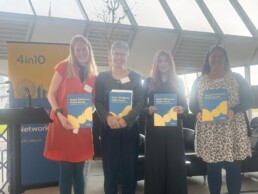
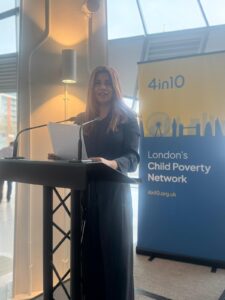 Last week, we were thrilled to host our ‘Make Childcare Make Sense’ conference at City Hall, generously hosted by London Assembly Member Marina Ahmad. This event marked the culmination of two years of dedicated work, focused on the challenges families on low incomes in London face when trying to access affordable childcare.
Our work was driven by an urgent and growing concern—raised both within and beyond our network—that the soaring cost of childcare is a key driver of child poverty in London, rivalled only by housing costs. In response, we partnered with our network members to investigate these experiences in depth. The findings are detailed in our report, Make Childcare Make Sense for Families on Low Incomes in London, published in March 2024.
The report revealed that the current childcare system is failing families. Many funding entitlements are inaccessible due to required ‘top-ups,’ inflexible policies that don’t accommodate diverse circumstances, and a lack of inclusivity for all children. Parents deeply value childcare, but they find the system frustratingly complex and overwhelmingly expensive.
These findings align closely with other key reports published around the same time, including the London Assembly Economy Committee’s Early Years Childcare in London and Business LDN’s No Kidding: How Transforming Childcare Can Boost the Economy. 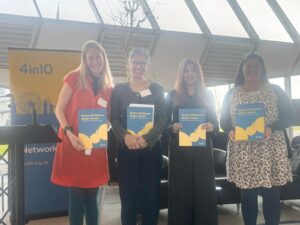
Our event last week, which was attended by a wide range of stakeholders, took stock of the situation nearly a year on. We heard powerful contributions from members of the Childcare for All campaign group about their lived experiences of childcare when you have no recourse to public funds, from Single Parents Rights Network and KIDS, who support families with disabled children to access childcare. All had clear and very pragmatic suggestions about how the system could do much better to support the groups they represent.
Rosa Schling from On the Record delivered a fascinating presentation on historical childcare campaigns, including the National Child Care Campaign of 1985, which called for “comprehensive, flexible, free, and democratically controlled childcare facilities funded by the state.” It’s striking how closely this aligns with what the parents we spoke to today still need and want.
We also heard from Sarah Ronan of the Early Education and Childcare Coalition and June O’Sullivan from LEYF, both of whom made a compelling case for an urgent policy shift. They emphasized that while the Government is making significant investments in early years education, these investments are failing to reach the most disadvantaged children. Failing to address this is an untenable position for a government that is committed to both reducing child poverty and improving early childhood development.
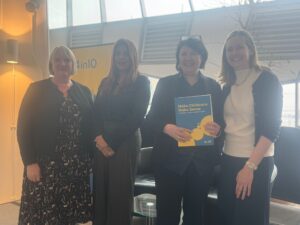
Finally, we were delighted that Joanne McCartney, Deputy Mayor for Children and Families was able to attend and address the conference; to hear directly from families, practitioners and researchers about the current challenges and we look forward to continued dialogue with her and the Mayor about what the GLA can be doing to both support the childcare sector and families and children to benefit from it.
If you couldn’t join us last week, we truly missed you—and we can confidently say you missed out too! But don’t worry—you can still be part of the conversation. Watch our campaign film, where parents dare to dream of a future where childcare is accessible to all children, free and on an equal basis: https://4in10.org.uk/make-childcare-make-sense-a-4in10-film/.
Childcare reform and tackling child poverty must go hand in hand
Early education and childcare has not been at the forefront of the last few elections but notably this time around it is a hot topic. All the main political parties seem to recognise, albeit from differing perspectives perhaps, that there is much to be gained from better supporting and investing in children in their earliest years. The Conservatives have re-emphasised their commitment to rolling out 30 hours of childcare a week to working parents with children from nine months old to when they start school by September 2025. The Labour Party have also pledged to deliver this same commitment and plan to open an additional 3,000 nurseries through upgrading space in primary schools to help them do so. The Liberal Democrats for their part say they would close the attainment gap by giving disadvantaged children aged 3 and 4 an extra five hours free a week and tripling the Early Years Pupil Premium to £1,000 a year.
The question we, as London’s Child Poverty Network are asking of all these offerings is whether they will benefit children and families experiencing poverty who at the moment are benefiting less from the system than their wealthier peers. Back in March we published a research report ‘Make Childcare Make Sense for families on low incomes in London’. In it we looked through the eyes of parents of young children living on low incomes in London and found that the current childcare system makes little sense to them. The funding entitlements were often not accessible as they couldn’t be used without having to pay ‘top ups’; they were not flexible enough to meet their individual circumstances; and were not inclusive for their children, those with special educational needs and disabilities and those whose families have no recourse to public funds being especially likely to be excluded. One single mum of a three-year-old told us:
‘You know, you’re kind of making lots and lots of sacrifices to afford what essentially is a basic need to help our economy keep moving. Yeah, [the childcare system] just shuts people out of work.’
Sadly, the Government’s expansion of funding entitlements which began to be rolled out shortly after our report was published in April this year, will do little to improve the situation for these families. Just 1 in 5 (or 20%) of families earning less than £20,000 a year will have access to the planned expansion of funded places for one- and two-year-olds in some working families, compared to 80% of those with household incomes over £45,000.[1] This matters to us because access to affordable, high-quality childcare and tackling child poverty are inextricably linked.
Sky high childcare costs in London are one driver of our high child poverty rate; including childcare costs in the Social Metric Commission’s measure of poverty increases the poverty rate among families with children by 0.4 percentage points.[2] So, at the most straightforward level, bringing down childcare costs, for those that already incur them, has the potential to reduce levels of child poverty. Beyond this, affordable and accessible childcare can contribute to poverty alleviation by supporting parents and carers to access paid work if they do not already or to increase their hours, and so increase their household income. Lastly but certainly not least, we know that high quality early education is critical to a child’s development and later educational achievement.[3]
For all these reasons, it is imperative that whoever forms the next Government deliver an early education and childcare system that benefits all children. We believe that the best way to make sure this happens is for childcare reform to be at the heart of a strategy to address child poverty. The Labour Party has made a very welcome commitment in its manifesto to putting in place a Child Poverty Strategy, it must make sure that its policy on childcare in a key plank of this. If it doesn’t and this synergy isn’t realised is a very real risk that childcare policy rather than reducing inequality, could increase it.
[1] Drayton, E. et al. (2023). Childcare reforms create a new branch of the welfare state – but also huge risks to the market. Institute for Fiscal Studies. Available at: https://ifs.org.uk/ news/childcare-reforms-createnew-branch-welfare-state-alsohuge-risks-market
[2] Poverty Strategy Commission (September 2023) Interim Report: A new strategy for tackling poverty
[3] Melhuish, E. and Gardiner, J. (2023). Equal hours? Sutton Trust

A young person speaks: the Local Child Poverty Statistics 2024
By Layla, aged 19 from London (name changed to protect her identity)
I respond to this news not just as a young person, but as someone who has personally experienced the harsh realities of poverty. The recent findings from Loughborough University for the End Child Poverty Coalition resonate deeply with me, and seeing that over 30% of children across the UK are living in poverty, with two-thirds of new constituencies having at least a quarter of children facing this struggle, brings back vivid memories of my own childhood and the beginning of my own adulthood.
Growing up in poverty meant constant uncertainty and anxiety, and meant watching my care giver struggle to make ends meet, sometimes having to choose between paying bills or buying food. It meant missing out on school trips, new clothes, and being pointed out as the free school meals kid. What I’m trying to say is that these are not just statistics; they represent real lives, real struggles, and real futures at risk.
Hearing the call from the End Child Poverty Coalition for political parties to prioritise this issue fills me with a sense of urgency as it would not just be a policy change, but a lifeline for many families.
The disparities highlighted, especially in areas like the North East, London, and the North West, show that this issue is widespread and deeply rooted. It isn’t enough to just acknowledge the problem; we must act.
As someone who has walked this path, I urge our leaders to listen and to act. the upcoming election is a chance to commit to real, meaningful change, and ensuring that no child has to grow up feeling the weight of poverty, and having the opportunity to thrive is something every party should aim to include in their campaign.

Can a national child poverty strategy be all things to all children?
Well, just as we were drawing breath after the London elections, we find ourselves back in election mode once more. And once again we will be straining every sinew to ensure that child poverty is a central issue of the campaign and one that all the political parties are held to account on. In particular we will be making the case for all parties to pledge to a child poverty strategy that not only makes firm and time-bound commitments about reducing and ultimately eradicating child poverty but also recognises that achieving this aim will require different approaches in different parts of the country.
Of course, some of the key policies that we, along with over 100 other members of the End Child Poverty Coalition, want to see front and centre in a child poverty strategy such as abolition of the two-child limit and benefit cap, are ones that an incoming Government in Westminster alone can implement. But we also need a child poverty strategy that operates regionally and locally so that it can respond to the different contexts that children live in across the country. For example, in the North East child poverty is driven in large part by low pay, insecure work and out-of-work poverty (North East Child Poverty Commission, 2024), whereas in London it is exorbitantly high housing costs along with costs such as childcare that are the major issue. Important new analysis from our colleagues at Trust for London and WPI Economics exploring the possible reasons behind the apparent fall in overall poverty numbers in London in the past few years, suggests that costs are now so high that for many people the only way to escape poverty in our city is to leave it.
A national child poverty strategy that fails to recognise these regional differences and allow for differential responses is not going to have the impact it so urgently needs to. The incoming Government, must engage with and harness the data and knowledge that the Greater London Authority, combined and local authorities have about their regions and localities and establish mechanisms to ensure sustained focus and action on the issue at regional and local level. Moreover, it needs to recognise the impact that the collapse of local government funding has had on children’s services which has undoubtedly affected the poorest children most. It is crucial that a child poverty strategy ensures that local authorities are sufficiently resourced to meet the needs of the children living in their communities.
So, in answer to the question, yes, a national child poverty can and must deliver for all the UK’s children, no child wherever they live should be experiencing poverty, but this will only be achieved if we acknowledge and respond to their different circumstances. From our perspective as the London Child Poverty Network, we will use the coming weeks to champion as loudly as we can the right of the 700,000 children living in poverty in London to live in a poverty free city, a goal that we firmly believe is achievable if the political will is there to achieve it.

Tackling child poverty must be high on the new mayor's agenda
Yesterday Londoners went to the polls to elect their Mayor and members of the London Assembly. As we await the results, it is a good moment to pause and consider what should be at the top of the Mayor’s agenda from day one of their new term of office. From our perspective at London’s Child Poverty Network we are crystal clear that tackling the high levels of child poverty that continue to mar our city must be up there.
The first crucial step towards bringing about a child poverty free London must be to work with those children, families and those organisations who support them in their communities to develop a strategic response to tackling the problem over the next four years. As a network we have been very supportive of Sadiq Khan’s move to guarantee free school meals for all primary school children in the city, which demonstrates that he gets the severity of the situation and the need to take bold action to address it – but we know that on its own, it is not enough. Now is the time to bring everyone to the table to decide what other actions need to be prioritised to address the systemic causes of poverty. And we are not the only ones saying so, just before the election period began back in March a cross-party group of London Assembly Members supported our call and published a report recommending that ‘[t]he Mayor, working in conjunction with local authorities and the voluntary sector, should publish a child poverty strategy for London in 2024-25.’
So, what are the key policies the strategy ought to contain? Well, it is a fact that many of the levers for reducing child poverty lie beyond the direct powers of the Mayor of London; our broken social security system for example, which exacerbates rather than ameliorates child poverty rates by setting benefit payments at levels which are not sufficient to provide families with essentials; discriminates against larger families through the two-child limit; and imposes sanctions that push families into debt rather providing them with the scaffolding they need to escape poverty. These are not policies the Mayor can directly change, although they can add their strong voice to the chorus of cries for reform.
Where the Mayor can take direct action though, they must. Child poverty in London is driven in large measure by the exorbitantly high costs of living in the city, housing first among them. Without access to decent housing, 84,940 children in our city are living in temporary accommodation, often deprived of basics such as access to a hot nutritious meal, a warm comfortable bed and space to play and learn. Whoever emerges victorious from the election count will already be well aware that sorting the housing crisis is going to be one of the biggest challenges they face and indeed all the main candidates have pledged to do so, in various ways, during their election campaigns. What we are calling for now is for these efforts to also be a central plank of a new child poverty strategy for the city. By looking afresh as the problem through this lens we can ensure that the housing that is built truly meets the needs of young families living on low incomes and enables them to live in and contribute to our city, as part of our communities rather displaced to other more affordable parts of the country.
Addressing high childcare costs must be part of a London child poverty strategy too. In our recent report Make Childcare Make Sense we looked at how sky-high childcare fees disproportionately affect families living on low incomes making it next to impossible for them to stay and/or progress in work and how an inclusive, affordable childcare system could vastly improve their and the children’s lives and allow them to contribute to London’s economic well-being. Getting the national childcare and early education policy framework right is essential to achieving this goal but so too is leadership and intervention at the London-wide level and our report sets out a series of recommendations for the Mayor and GLA.
Faced with these high housing and childcare costs, another reason many families in London struggle to make ends meet is a lack of high-quality, well-paid work; in London, almost half of those in poverty are in employment and in 2022, 17% of Londoners in work were paid below the London Living Wage (Trust for London). Many of these also face the issue of insecure work. Recent research from the Living Wage Foundation has found that there are over 800,000 insecure jobs in London. Addressing these twin issues of low pay and insecure work must be another strand of a child poverty strategy.
Finally, is also crucial that a strategy recognises the interaction between poverty and discrimination and has addressing it at its core. We cannot for example, ignore the fact that systemic racism and disablism in the education system often combined with the impact of poverty, is responsible for holding back some of our young people and preventing them from flourishing in the way they should. A child poverty strategy rooted in a human rights-based approach is key to achieving deep and lasting change.
So, once they have had a chance to catch their breath, we hope our newly elected Mayor will engage with us as a network, draw on our members’ rich and diverse experience and work with us to map out and deliver a plan for achieving a child poverty free London; an achievable goal if we all harness our collective determination and belief to make it happen.

4in10 Newsletter 30.11.23
Read the latest newsletter here.
To get this directly to your inbox every fortnight please do join us.
4in10 Newsletter 16.11.23
Read the latest newsletter here.
To get this directly to your inbox every fortnight please do join us.
4in10 Newsletter 2.11.23
Read the latest newsletter here.
To get this directly to your inbox every fortnight please do join us.
4in10 Newsletter 19.10.23
Read the latest newsletter here.
To get this directly to your inbox every fortnight please do join us.
4in10 Newsletter 21.9.23
Read the latest newsletter here.
To get this directly to your inbox every fortnight please do join us.
4in10 Newsletter 7.9.23
Read the latest newsletter here.
To get this directly to your inbox every fortnight please do join us.
4in10 Newsletter 10.8.23
Read the latest newsletter here.
To get this directly to your inbox every fortnight please do join us.
4in10 Newsletter 13.7.23
Read the latest newsletter here.
To get this directly to your inbox every fortnight please do join us.
4in10 Newsletter 29.6.23
Read the latest newsletter here.
To get this directly to your inbox every fortnight please do join us.
Voter ID and Shout Out UK
A few months ago there was a change in how elections are run in this country, when the Elections Act 2022 came into force
The Act bought in a wide range of changes that will have an impact in London including removing second preference voting in Mayoral contests, but arguably the biggest change was the introduction of compulsory voter ID.
This was trialled in the local elections in May this year to mixed success. The Electoral Commission’s full report is not due out till September but their initial findings have been so troubling that they have released an interim report. This can be found here. The biggest takeaway for me from this was that 14,000 people were not able to vote as a direct result of these changes.
The most significant reason for this does seems to have been lack of awareness of the new rules – only 84% of people knew about the new requirements according to the interim report. I would here quote a family member who when reminded of the need to bring ID said ‘well I never have to in the past’.
Another issue which is of particular concern for us in 4in10 however is unequal access to the right forms of ID. The House of Commons Library produced a report in which they said:
‘The proportion of respondents to the Electoral Commission’s Public Opinion Tracker 2022 who did not have a suitable form of ID for voting was higher among more disadvantaged groups. 14% of unemployed people, 10-17% of those living in rented local authority or housing association accommodation and 7% of people with lower levels of education did not have a suitable form of ID.’
Indeed the interim report found that two of the groups were awareness was lowest was among younger age groups (18 to 24-year-olds) and Black and minority ethnic communities which were both at 82%.
Valid forms of ID
The other issue that continues to be of concern is the types of valid ID. The list of ID that is accepted can be found here.
If you have a look at this list, one thing that becomes immediately clear is that the majority, if not all, of the options available cost money to obtain – a passport for example costs a minimum of £90 once you take into account the cost of the photo.
Some would then counter with the fact that in theory you can obtain a ‘free’ form of ID from your council but even this isn’t completely free as you are expected to bring a passport style photograph with you.
For some families that are already having to choose between heating and eating, paying for a photo to be produced and then spending time finding and filling in a complicated form simply can’t be a priority.
This can be shown in that awareness and take-up of the Voter Authority Certificate (a free voter ID document you can apply for) was low with only 89,500 certificates being issued around the whole Country according to the Electoral Commission’s interim report.
The London Context
London already has one of the lowest voter registration rates in the UK and these changes has the potential to make this situation considerably worse.
There are many reasons for this but one of the biggest is the high proportion of ethnic minority communities in London. Voter registration tends to be lower in ethnic minority communities. This is the case for many reasons, including in particular insecure, short term housing but no matter what the cause the result remains the same.
We at 4in10 are concerned that unless more is done to raise awareness of the new rules and to make it easier and cheaper to obtain the necessary ID, then Londoners who are already at most at risk of being disenfranchised will be denied the right to vote.
That is why over the last few months we have been supporting Shout Out UK who have been leading the public awareness campaign on this issue and we will continue to do so.
We are asking our membership to help us and Shout Out UK by spreading the word about it and where possible help people to get the ID that they need. Find out how here.

4in10 Newsletter 15.6.23
Read the latest newsletter here.
To get this directly to your inbox every fortnight please do join us.
Child Poverty in London: a societal problem calls for community-led solutions (Part 3)

Our Research and Learning Officer, Emily, discusses three questions on the issue of child poverty in London. This piece is split across three blog posts:
- What is child poverty?
- What’s the state of child poverty in London?
- How do we end child poverty?
How do we end child poverty?
This is a big task. Let’s say tomorrow the government printed money and gave it to every family under the relative poverty line and promised to keep sending them money to ensure they never fall below that line, would child poverty end? If that question were posed to different politicians and members of the public, I’m sure several revealing answers would emerge. The reality is that things are much more complicated than just money. But as a start, money really does help. The £20 per week uplift to Universal Credit that was temporarily put in place during the pandemic pulled 400,000 children out of poverty. Other estimates claim that making this permanent would lift 500,000 children out of poverty. So money must be part of our child poverty strategy. So too would other public systems. Having an adequately sustained NHS and mental health services would keep children and their parents well, which cuts costs, both in terms of health itself and the knock-on effects of poor health.
Flexible working could also be seen as a support structure to allow adults, particularly women, to work consistently and progress in their careers while also caring for their children. And there’s also the housing issue. In London housing is incredibly expensive and too many affordable options are unsuitable. Guaranteeing affordable homes for everyone can be seen as part of a child poverty strategy.
So it’s about money, but it’s also about a community-based strategy. We need to eradicate the shame. There is no reason to judge people. Ending shame is not ending personal responsibility. Ending child poverty requires us to work together. It means believing the evidence that shows the causes of inequality and poverty are multiple and intersecting. It also means, perhaps, as a community taking on the shame that we don’t yet know how to support each other well enough. Privilege and discrimination has blinded many of us to our own personal responsibility. We can do better at that, but we need to be honest about our role and how we can learn to support each other more holistically and with respect.
4in10, London’s Child Poverty Network is committed to supporting collaborative working. We are a network of organisations who want to see an end to child poverty in London. There is so much brilliance bottled up in the children of this city. When we invest in them and make sure each of them has an opportunity to thrive, then we will begin to see transformations that we will all benefit from.
London’s Child Poverty Alliance, the policy sub-group of London’s Child Poverty Network has identified four key areas that can be catalysts for change. In our Manifesto, we outline current areas of inequality and systemic failure that are points of potential transformation that could ultimately bring an end to child poverty in London. Secure, adequate income will give families the resource to access what they need. All across London, our homes are fundamental to our health and wellbeing. When our homes are of decent quality, the comfort and security they provide enrich our lives and support our mental and physical health. Every child deserves the best start in life, ending child poverty means ensuring every child has access to the early education and childcare to thrive. Lastly, having access to nutritious and reliable food sources so that all children are free from hunger can target one of the essential threats of child poverty. Together, we can make child poverty a way things used to be rather than how we live now if we target these four areas as crucial pinch points of poverty to make London a fairer city for every child.
Child Poverty in London: a societal problem calls for community-led solutions (Part 2)

Our Research and Learning Officer, Emily, discusses three questions on the issue of child poverty in London. This piece is split across three blog posts:
- What is child poverty?
- What’s the state of child poverty in London?
- How do we end child poverty?
What’s the state of child poverty in London?
Unfortunately, the number of children in poverty across London is extremely high. The latest figures from 2021/22 show that London has a child poverty rate of 32.9% according to End Child Poverty Coalition. We expect this to increase when the current year’s figures are released. Experiencing poverty can mean children are only able to afford cheap, unhealthy food. It might mean they skip washing their clothes, bathing and brushing their teeth. It can result in anxiety and isolation, aggressive or regressive behaviour. Being trapped in poverty can lead to a stressful environment at home, where children feel like they need to take on adult responsibilities to help out. While all these things can be true for any child of any household income, the likelihood of overlapping challenges or examples of ‘going without’ can be much greater when a child is in poverty. Parents can be doing the best they can with what they’ve got, but they can’t absorb all of the trauma that impacts them and their families.
How do we respond to child poverty?
The government prioritises helping families get into work. This can be one valuable, effective way to help families in poverty. However, it’s important that context is considered. For one, balancing children’s needs with a work schedule is very difficult. So, for single-parent families flexible, adequate work is crucial. In addition, some parents can’t work because either they or their child is disabled and therefore more support is needed that looks different than paid work. Also, illness needs to be considered as some adults can’t work because they are dealing with an acute illness. Therefore, as a society, we have to think about helping families get support and money in their pockets and community connections that look beyond the paid work route out of poverty.
At 4in10, we talk about supporting organisations who work to end poverty or mitigate its impact. To end child poverty would be to ensure that families have the income they need to cover the essentials. This can look like a robust social security which puts money back into the pockets of families, it can also look like higher pay which increases the incoming funds on a regular basis and it can also take the form of organisational tax breaks or social investment in services so that more support is freely available which reduces the need to ‘buy in’ to participate in local communal activities and opportunities.
In terms of mitigation of the effects of child poverty, again, some specific considerations help draw out this point. Children know when they don’t have as much as others. Children are experts in observation, they learn from seeing and doing and so they know when things are different. When it comes to household finances, they may not know the details or understand the specific issues, but children are capable of knowing when they have less or shouldn’t ask for more. As part of communities all across London, we can help nurture belonging and fairness by making it easy to share resources, reduce additional expenses at school and offer out-of–school activities that are free of charge and sustainably developed and delivered. By making it less about what you can buy and more about where we can belong, the organisations such as youth clubs, art groups, theatres, community organisations, schools and many other community-led programmes help children access support and meaningful relationships with those local to them. This can create a buffer between children and the impact of poverty on their wellbeing. These kinds of services will always be important, even if child poverty disappeared from London. Their existence helps offer important outreach to children and their families. It’s important that these organisations can focus on what they do best, but the current system demands them to follow the money in terms of endless cycles of grant submissions, reporting and project adaptation to keep the budgets balanced. This makes losers out of all of us. Funding can and should be sustainable.
There are steps that all of us can take in our organisations and as individuals to help advocate and implement change. In our Manifesto for a child poverty free London, we outline four key areas that would help reduce child poverty across London. Income, housing, childcare and hunger. These four areas impact us all and in different ways, individuals, businesses, local, regional and national government can help contribute to make the situation better for children. This is not about attributing blame on any one group, but about community-centred and multi-faceted responses to helping improve the lives of children and challenging inequalities when and where we see them.
4in10 Newsletter 1.6.23
Read the latest newsletter here.
To get this directly to your inbox every fortnight please do join us.
4in10 Newsletter 17.5.23
Read the latest newsletter here.
To get this directly to your inbox every fortnight please do join us.
4in10 Member Conducts Research on Low-Income Families and SEND Support
Over the past several months, 4in10 has been working with one of our members, Education and Skills Development Group (ESDEG) to support them in creating an excellent report that outlines the importance of their work with low-income ethnic minority families with children who are eligible for SEND support. With a financial contribution from 4in10, Suchismita Majumdar, ESDEG’s Communications & Policy Officer conducted comprehensive interviews and analysis with the ESDEG team to get a sense of the particular needs and challenges children who require SEND support face when they and their parents seek access to additional support.
The report takes an impressive introspective look at the programmes ESDEG offers and the support they give to children and their parents in response to the particular needs of specific ethnic groups, in particular, Somali, Pakistani, Afghan, Indian and Black Caribbean communities.
Their report, available here, shines a light on the situation both for non-white families across London who encounter barriers because of cultural and economic stigma as well as the more widespread scarcity of SEND programmes and professionals in the state school system across London.
The report also includes some key evaluations that ESDEG has identified to help guide them as they plan and implement future programmes, policies and campaigns going forward.
4in10 Newsletter 4.5.23
Read the latest ewsletter here.
To get this directly to your inbox every fortnight please do join us.
How Poverty Feels
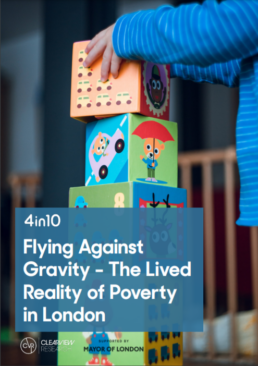
In 2021, 4in10 in partnership with the Greater London Authority commissioned ClearView Research to speak with Londoners to understand what poverty felt like since the Covid-19 pandemic had hit. What Londoners said helps paint a picture of the challenges that so many people face.
All of us across the city have ambitions and there is plenty of opportunity to go around, but it’s been ring-fenced for a small group of people leaving many with too little left. The report showed that with an inadequate social security system, many families found the challenge of gaining secure employment, suitable housing, affordable childcare and everyday costs out of reach. Despite having big dreams, many felt that they were fighting forces beyond their control, an experience compared to flying against gravity.
In 2023, with numerous strikes occurring on a regular basis, it’s clear that workers in many sectors feel they are at breaking point highlighting that the foundations are in need of repair. Basic transportation, health and teaching services are woefully underfunded and lacking investment for innovation and expansion. It’s worth revisiting this report to understand what families are facing today.
Families can’t strike, they have to keep up the fight despite recent data showing that low-income Londoners have faced 21% inflation over the last three years. Families are choosing between heating and eating and the prospect of focusing on career progression when your flat is mouldy and transportation is unaffordable and childcare is inaccessible is an impossible challenge.
What Londoners asked for in the report was for government to make the basics affordable. If childcare, cost of living bills and transportation were affordable then the possibility of families accessing better employment and housing that would enable them to thrive could come to fruition. This is what a good social security system does, it ensures we all have what we need through a social investment for us all. We need policies shaped by all of us to ensure no one gets shut out of decisions that affect them.
Revisiting this report from 2021 is worthwhile because its key findings still hold their weight. That is that poverty is something most of us are concerned about and 85% of us believe that politicians should do more about it.
With local elections just around the corner and London mayoral elections and a General Election on the horizon, it’s worthwhile thinking about making sure politicians hear from you that ending poverty warrants strategic policies. It must be a priority if communities are to thrive, and industries continue to expand providing income sources for Londoners. Flying Against Gravity shows the experiences of Londoners in first-hand accounts that remind us of the emotional toll that is unacceptable.
Together we can do more by demanding lasting change to ensure we all have what we need to soar.
4in10 Newsletter 20.4.23
Read the latest ewsletter here.
To get this directly to your inbox every fortnight please do join us.
4in10 Newsletter 6.4.23
Read the latest ewsletter here.
To get this directly to your inbox every fortnight please do join us.
4in10 Newsletter 23.3.23
Read the latest ewsletter here.
To get this directly to your inbox every fortnight please do join us.
4in10 Newsletter 23.2.23
Read the latest ewsletter here.
To get this directly to your inbox every fortnight please do join us.
4in10 Newsletter 8.3.23
Read the latest newsletter here.
To get this directly to your inbox every fortnight please do join us.
London mothers tell the United Nations temporary accommodation violates children’s rights.
4in10 and Little Village have collaborated to write a submission for the examination of the United Kingdom’s 7th periodic report to the United Nation Committee on Economic and Social and Cultural Rights (CESCR). The CESCR committee is currently reviewing the UK Government’s compliance with the International Covenant on Economic, Social and Cultural Rights.
Little Village is a charity that fosters a village of support and solidarity for families on low incomes with children under five in London. Little Village equips families with pre-loved children’s clothes and baby essentials as well as linking them with key services. They also work alongside parents to fix the system that keeps them trapped in poverty.
The research for this report was informed by a human rights-based approach, 4in10 worked in partnership with a small group of mothers who are part of the Little Village community. In this process, the contribution made by the mothers seeks to bring to the attention of the CESCR their experiences of struggling to access safe and affordable housing, a lack of access to basic necessities and difficulties accessing childcare and therefore being able to work. Therefore, this report contains evidence that the rights under Article 11 ICESCR – the right to an adequate standard of living, and Article 6 ICESCR – the right to work are not enjoyed equally in London. The UK government has failed to protect the rights of families with young children under 5 years of age living in London. It’s time to hold the UK Government to account and more than that, it’s time for change.
A few excerpts from the report are illustrated below. To read the report in full click here.
Key findings
Experiences of inappropriate and unsafe housing
The mothers shared their experience of a lack of access to safe, secure housing for themselves and their children as one of the most acute issues they face and an issue that they wished the report to draw the Committee’s attention to. Several of the women were or had previously been placed by their local authority in temporary accommodation. London has an acute homelessness problem, with 10 times more London households in temporary accommodation than in the rest of England[1]. In 2021 nearly 56,500 households were living in temporary accommodation, including 75, 580 children. Furthermore, research on the crisis of family homelessness in the UK shows that temporary accommodation is harmful to families. For example, research commissioned by The Cardinal Hume Centre and Home-Start Westminster, Kensington & Chelsea and Hammersmith and Fulham and published last week into the experience of families living in temporary accommodation in Westminster found that temporary accommodation is more than just a housing problem, the impact spans many areas including health, education, child development and a family’s financial situation.[2]
Similarly, the mothers had found the housing their families where places in to be inadequate for their needs and damaging to their mental and physical health as well as that of their children. One mother shared:
“When I had a studio flat with my son, it was so damp. Every time I called they just say you have to wash it [the walls]…but it would keep coming back. My son has an inhaler because of living in mould.”
Inadequate housing can have a detrimental impact on a child’s mental health. A mother shared that their children were showing signs of depression due to overcrowding:
‘Children are depressed because of sharing bedrooms. So, they may act out at school because their needs are not being met at home.’
While temporary accommodation is intended to house homeless families only for short periods of time, this was not the case for the women and other families across the UK. A combination of cuts to local government funding, an inadequate welfare system and a lack of permanent social or affordable housing has driven this increase. Consequently, children in London are growing up in substandard and unsafe temporary accommodation and the effect this is having on children’s rights cannot be understated. If the government is committed to its pledge to the international covenant, then giving families a safe, secure and decent home to live in must be the foundation of this.
Lack of access to childcare as a barrier to work
Another issue that the women highlighted as a priority for the Committee to examine was the barriers that prevent them from exercising their right to work.
When families are housed, especially in temporary accommodation, this is often far away from existing connections including employers and wider families and other sources of support. One mother told us how she was moved from south to north London, which meant, she would have to travel up to 2 hours each way to drop off her child with a family member who could provide childcare while she worked. The high costs of travel and subsequent lost work-time mean that this is not financially viable. Unable to make work pay this mother must rely on a small maternity payment: “I receive £626 a month and that is it. I have to buy nappies, electric every week… the money goes like that.”
Additionally, the women expressed their desire to work to increase their incomes to support their children, but this was impossible given the lack of affordable and accessible childcare available to them. Another woman, reflecting on the very high costs of childcare, asked “How can I work with 3 kids?’ Childcare in the UK is amongst the most expensive in the world according to the Organisation for Economic Co-operation and Development. In London, the cost of childcare is 30% higher than elsewhere is the country. [3] The consequence of the failure of the government to uprate the childcare element of Universal credit and the universal credit system not being set up to pay childcare fees in advance means parents are unable to make work pay and are being blocked from the workforce. Hence, polling commissioned by 4in10 in 2021 among a representative sample of Londoners found that childcare costs were felt to be the biggest driver of poverty in the city[4]. While childcare is the infrastructure that allows parents, particularly mothers, to enter or re-enter the workforce, we also know that early years is crucial to for enhancing life chances for children living in poverty.
These experiences shared by the group of mothers are shocking to read and sadly have been a reality of many low income families living in Londoners for too long. The report concludes that despite the UK Government’s assertion in its 7th periodic report to the Committee on Economic, social and Cultural Rights that it is “committed to a sustainable, long-term approach to tackling poverty”, the evidence in the report shows the UK Government is in fact failing to protect young children and their families in London from the damaging effects of poverty and is breaching their rights under ICESCR, specifically Article 11 (1) The right to an adequate standard of living and Article 6 the right to work. We urge the United Nations to listen to the voices of the women who share their experiences and call on the UK government to uphold their commitment to protect and implement these rights.
[1] Centre for London (Sept 2022) Temporary Accommodation: London’s hidden homelessness crisis
[2] The Cardinal Hume Centre and Home-Start Westminster, Chelsea and Hammersmith and Fulham (Feb 2023) The Experiences of Families Living in Temporary accommodation in Westminster.
[3] Child Poverty Action Group (June 2021) ‘THE COST OF A CHILD IN LONDON: HELP WITH CHILDCARE FEES ‘WOEFULLY INADEQUATE’
[4] 4in10 London’s Child Poverty Network (October 2021) Flying Against Gravity: the lived reality of poverty in London
Children with special educational needs and disabled children

4in10 organised a coffee morning in February 2023 that was jointly hosted by staff and parents at Marjory Kinnon School in Hounslow. Rochelle McIntyre, the Family Support and Community Outreach Worker facilitated the discussion and had invited her colleague Jo Stacey, Assistant Head Teacher, Key Stage 2 and Staff Governor as well as a parent to provide first-hand experience.
This mother shared her experiences as a single-parent and the challenges of caring for a child with autism. Throughout the group discussion, a few key costs were mentioned that demonstrate the challenge of parenting and educating children with a learning disability. These include:
- Changing dietary needs and specific food items being essential to meet the sensory needs of the child, these foods are often more expensive or difficult to predict and buy reduced
- Clothing and textures becoming uncomfortable leading to new purchases frequently
- High costs to attend a sensory appropriate gym, averaging £17.50 per visit which swallows up a high proportion of the Disability Living Allowance (DLA) that her son is entitled to
- Taxis across London for appointments as the underground is too overstimulating
- This parent shared that her son often strips off his clothes at home meaning its particularly important to keep the house warm enough, thus adding to the cost of utilities.
The emotional side for parents was also highlighted. A parent in attendance explained that working part time and taking coursework all had to stop because it just became too overwhelming for her and exhausting to keep up. Even when she was able to access a personal assistant, there were still costs associated with the PA taking care of her son or taking him out and about that limited how much her son could do with her PA. Thus, it felt like there were always limitations and challenges as to how much help she could get because the costs keep adding up.
Another parent of a child with autism shared her own experiences and emphasised that practical help is important, but the challenge of supporting and adjusting to the sensory needs of a growing child with autism is always there.
At 4in10, we want to listen to these experiences and share them with those who make decisions that impact children and their parents. We want to highlight the financial and emotional challenges that parents face and the impossible situations that parents with low-incomes encounter when caring for a child with a special need or disability. If you have other thoughts or experiences that you’d like to share, please do get in touch so we can support growing more awareness and social action to advocate for better support of children with varying needs and financial situations.
4in10 Newsletter 9.2.23
Read the latest newsletter here.
To get this directly to your inbox every fortnight please do join us.
4in10 Newsletter 26.1.23
Read the latest newsletter here.
To get this directly to your inbox every fortnight please do join us.
Research about young people designed by young people for young people

Reflections from Research and Learning Officer, Emily Barker, on an exciting new venture organised by one of our members and taking place across London.
Young Londoners Research Project
For those interested in youth-led research, I’ve got something to share! I came across a brilliant series of projects that our member, Partnership for Young London, is coordinating along with Rocket Science and Young Harrow Foundation. A total of nine research projects are taking place thanks to these partners working with the Greater London Authority who has commissioned ‘a new programme that will fund and support young people, their youth or support workers and their youth organisations to research young people’s views.’
Follow this link to learn more about the Young Researchers Programme and for a description of the nine exciting projects underway. The variety of projects speaks to the scope of creativity and talent of these young people. It’s a thrill to hear how passionate as well as thorough and insightful these young people are about putting in the work to develop new knowledge that will help improve the experiences of young Londoners.
When young people are involved in evaluating and improving the services aimed at them, it can help increase the reach and impact of these services on those who need it most. Many of the projects consider what barriers exist for young people who need to access additional support. Making steps to improve young people’s lives is a key strategy in mitigating the impact , both immediate and long term, of child poverty.
I am especially looking forward to hearing about the findings of the research projects in spring 2023! I can’t wait to learn from their analysis!
4in10 Newsletter 12.1.23
Read the latest newsletter here.
To get this directly to your inbox every fortnight please do join us.
4in10 Newsletter 15.12.22
Read the latest newsletter here.
To get this directly to your inbox every fortnight please do join us.

Newham Nurture roundtable
4in10 Manager Katherine reflects on the Newham Nurture roundtable event she attended this week
Earlier this week I had the great pleasure of attending an event that showcased and celebrated the work of the Newham Nurture project. Newham Nurture is a community partnership with NCT, Alternatives Trust, The Magpie Project and Compost London. The programme supports women through pregnancy and up to two years after birth from low income, migrant and marginalised backgrounds experiencing financial hardship and disadvantage. It does this by providing drop-in pregnancy sessions, Baby & Me sessions for mums with babies from newborn up to 2 years, peer support and counselling.
A few reflections…
The project shone out as an example of what good partnership working and co-production ought to be, but all too often isn’t. The women from the project steering group, many of whom also deliver its work as volunteers and staff members, spoke eloquently and movingly about their own experiences of struggling to access the support they needed as pregnant and new mothers, about how the partner organisations were a lifeline for them and how passionate they are about making sure that help is now available to other women who so desperately need it. It was also clear from the discussion that there was a high level of mutual respect between the project partners and local statutory services, with a clear acknowledgement that unless services really listen to and act on what women are telling them then they will remain inaccessible to many.
There is a lot for others to learn from the experience of the project. While Newham’s challenges may be distinctive, there is no doubt that in many other areas of London there are families who would benefit enormously from the support of a project like Newham Nurture. The experience of having a baby can be a daunting and isolating experience for any woman, and if you add to that experience of loss and trauma, very low income, insecure housing, language barriers and discrimination, then this is magnified many times. The event concluded with a powerful audio recording of women who come to Newham Nurture talking about it and what it meant to them. The message that came over loud and clear was that they valued the project not only for the accessible, practical advice and support it gave them but also a place where they and their children could come, feel welcomed and enjoy the friendship of others who have trod similar paths ahead of them. Compost London are evaluating the work and I look forward to reading and sharing their findings with all the other organisations in the 4in10 network so that they can learn from the excellent work that Newham Nurture has planted, grown and is now blossoming in their community.
While the overwhelming feeling I had on leaving the event was one of hope; gained from witnessing the deep commitment that the women who lead this programme have to supporting one and another and working tirelessly to improve the lives of their young children, it was also tinged with anger. Anger that the choices of our politicians are wreaking such damage on these families’ lives and withholding the resources needed to ensure their children’s rights to food, health and education. With no end to the cost-of-living crisis in sight and further cuts to services on the cards, it is alarming to think that the situation for these families will get worse. Drawing on the hope and belief that change is possible, as the project so clearly demonstrates, we must redouble our effort to challenge these systemic injustices and demand better for children and families.
4in10 Newsletter 1.12.22
Read the latest newsletter here.
To get this directly to your inbox every fortnight please do join us.
4in10 Newsletter 17.11.22
Read the latest newsletter here.
To get this directly to your inbox every fortnight please do join us.
4in10 Newsletter 3.11.22
Read the latest newsletter here.
To get this directly to your inbox every fortnight please do join us.
4in10 Newsletter 13.10.22
Read the latest newsletter here.
To get this directly to your inbox every fortnight please do join us.
4in10 Newsletter 15.09.22
Read the latest newsletter here.
To get this directly to your inbox every fortnight please do join us.
Hello from our new Research and Learning Officer
I am so very excited to have joined 4in10 as Research and Learning Officer . My name is Emily Barker and I look forward to ensuring that 4in10 continues their amazing work of bringing together and providing support to London’s brilliant network of charities and individuals who are working to reduce the impact of child poverty across the city.
It’s a privilege to be part of a team working hard to support all of our members as we fight to end child poverty in London. Sadly, it feels like this winter will be an uphill battle after an already exhausting several years for us all in both our individual professional and personal lives. But in partnership, we can do so much more and our collective voice has the potential to demand permanent change in our capital.
So while this post serves as an introduction, it’s also an invitation. In my role, I want to provide our members with a balanced mix of events that fall under three main categories:
- Capacity building-to equip you with new tangible skills relevant to your work and organisational objectives
- Social Networking-to cultivate an active and supportive network of likeminded people working to respond to the growing inequality and demanding better for the future
- Information sharing-to provide clear, succinct summaries of recent policy changes or emerging research that fosters creative responses to complex problems
In addition, I will be facilitating some collaborative research with a few member organisations to ensure the voices of those with lived experience are centred in our calls to action of local and national leaders. This project is still being developed but would include a small research grant for participating member organisations.
If you would like to suggest future events or learn more about our future collaborative research project, please do get in touch to continue the conversation! Equally, I’d be very keen to visit your offices or attend your own events to learn more about your current work and immediate challenges.
I want to work together and ensure that the opportunities and information 4in10 provides is practical, relevant and not duplicating what’s available elsewhere. If there’s something you need or want to learn more about, you’re probably not the only one, so please share your ideas.
I look forward to meeting you digitally or in person over the coming months and thank you for all the work you do.
4in10 Newsletter 1.09.22
Read the latest newsletter here.
To get this directly to your inbox every fortnight please do join us.
4in10 Newsletter 3.08.22
Read the latest newsletter here.
To get this directly to your inbox every fortnight please do join us.
4in10 Newsletter 21.07.22
Read the latest newsletter here.
To get this directly to your inbox every fortnight please do join us.
Government Holiday activities and food programme 2022

Holiday activities and food programme 2022 across London
The Government has provided local councils with some funding to allow them to fund free holiday childcare and food provision.
Full details about the program can be found here.
Around London each local council has spent the funding in different ways and supported different organisations so here at 4in10 we have attempted to gather them all together in one place.
Levelling Up White Paper: Why using London as a yardstick risks children everywhere

Levelling Up White Paper: Why using London as a yardstick risks children everywhere
In February, this year, the government released their long-awaited Levelling Up White Paper, a 300-page long publication covering everything from the history of the biggest cities in the world to twelve separate missions for the UK. By now, and a few months on from its publication, you may have read any number of analyses or opinion pieces on this unusual document.
At 4in10, London’s Child Poverty Network, amongst the myriad of missions and metrics, there were two key issues stand out as being of great concern:
- Child poverty in London is completely absent from the paper (the phrase ‘child poverty’ does not appear at all).
- London is used a yardstick for success for other regions, despite having the highest levels of inequality and poverty. The White Paper explicitly intends to replicate London’s economic model in other regions despite these facts. This risks the exacerbation of child poverty not just in London but in other areas identified as needing to be ‘Levelled Up’ (Middlesbrough, Blackpool, Newcastle, the Humber etc).
Child Poverty in London and Levelling Up
Although London is discussed in some sections of the Levelling Up White Paper, child poverty levels are not referenced. This is despite four in ten children in London currently living in poverty and nine of the ten local authorities with the highest levels of child poverty being located in London. If children in the capital, or elsewhere in the UK, are going hungry due to poverty – and the White Paper fails to mention – let alone address this – the phrase ‘Levelling-Up’ rings hollow. The White Paper does discuss the deprivation and lack of investment into many regions across the UK. However, it is possible for two truths to be present at once:
- Vast areas of the UK have experienced chronic underinvestment.
- London’s children are experiencing worsening poverty levels and increasingly deep levels of poverty.
It is true that some of London’s children do experience some advantages (but these tend to be limited to social mobility measures); a child on free school meals in London is twice as likely to attend university compared to those in the north of England. In London’s most deprived areas, nearly 90 per cent of secondary schools are either good or outstanding, compared with less than 50 per cent in deprived areas of the north. Transport spend per head has been higher in London for a decade (although this doesn’t always benefit poorer Londoners in outer boroughs); London transport spending per head was £864, compared with £379 in the north-west of England between 2009-2020. All of these facts are little compensation to the 12 children in a classroom of 30 who live in poverty in London. If one of the children in an East London classroom ends up going to Oxbridge, or gets a job at a top law firm, that is little compensation to the 11 others who still live in poverty. Similarly, the ability to get from Hackney (East London) to Thornton Heath (South West London), for as little as £1.65, means very little when the parent to the child pays (on average) £1,650 on rent per month in Hackney.
At 4in10, believe the Levelling Up agenda can, and should, address both regional underinvestment and child poverty rates in all areas of the country, including London. We should not pit children in one area against another (as the White Paper states itself; page xiv)– any child growing up in poverty in the United Kingdom is an avoidable tragedy.
There is a real risk that the high levels of poverty and child poverty, experienced in London and elsewhere, will be overlooked by national policy makers in light of the White Paper.
Replicating London’s Private Sector Productivity Model
“Typically, differences within UK regions or cities are larger than differences between regions on most performance metrics” (Levelling Up White Paper 2022: p27)
A significant part of the reason child poverty is overlooked by the Levelling Up White Paper is due to the fact the main objective of ‘Levelling Up’ is to reproduce the London’s levels of productivity in other regions of the UK, through processes of agglomeration. It is consistently implied, in the White Paper, that living standards will increase once the rest of the UK’s long standing productivity problems are resolved. In London, both as a whole unit and at local authority levels, productivity metrics are higher than other regions. Across the measures selected by the government as indicative of a productive area, Gross Value Added per hour, median gross weekly pay, and proportion of population with a Level 3+ qualification – London scores highly in comparison to other regions. This leaves London’s true picture of poverty somewhat obscured.
Using Gross Value Added (GVA), the favoured productivity measurement of the government, Tower Hamlets is the third most productive region in the country (ONS 2021). Therefore, Tower Hamlets has ‘Levelled Up’, right?
If you were to walk down in a street in Tower Hamlets, in the shadow of Canary Wharf, one in two families (55.8% – End Child Poverty Coalition: 2021) would be living in poverty; if you asked them how high GVA levels or the private sector productivity of the financial district has benefited them, they would struggle to give you an answer.
This gets to the heart of why we at 4in10 are alarmed that this model is being sought to be replicated elsewhere. Living standards, such as child poverty, in Tower Hamlets for example, would not be improved by a further increase in shiny new private sector buildings in the borough.
As a network organisation whose members have seen the impact of child poverty rising over the last decade, the use of London as a yardstick for success or model to be copied is highly concerning. It is not just concerning for children in London, but also for children in places like Leeds, Rotherham, and Middlesbrough, who are the primary focus of ‘Levelling Up’ narratives. Whilst ‘Levelling Up’ certainly means different things to different people, but we would all agree that an area has not levelled up whilst still having extremely high levels of child poverty.
The Equality Trust and New Economics Foundation have already flagged that the Levelling Up White Paper must focus on people, not just places. Research from the NPC (2022) shows that only 2% of the total levelling up funding is going on supporting social infrastructure so far, despite the public’s expectation that will Levelling Up tackle social issues. The public consider the most important aspects to an area being levelled up to be reduced homelessness (36%) and reduced poverty (36%).
However, the problems with the White Paper and child poverty levels in London run even deeper when contextualised against continuous unhelpful narratives:
How Can We Change The Narrative That London Doesn’t Need To Be Levelled Up?
After waiting a few months to see if these concerns would be addressed by policy makers, it is clear that we need an alternative narrative or frame to tell the true story of child poverty in London. Despite years of (sky) high child poverty rates in London, Westminster are simply not listening. No single statistic will provide a silver bullet to this problem, as:
- People outside of London either aren’t aware of the scale of child poverty in London, or they simply don’t believe the scale of inequality and poverty in London when presented with evidence.
- There is a sense of unfairness/grievance felt towards London from some parts of the UK; typically providing London with any public funding is unpopular.
- London is no longer a major political priority for either the national Conservative or national Labour parties
In light of these factors, we need urgently to find an alternative way to make the case for the 700,000 children living in poverty in the capital.
We want to work alongside our members, and anyone who shares our concerns about child poverty in London to help us tell the true story of its impact and challenge the prevailing narratives in the White Paper that prevent us from tackling it.
4in10 Newsletter 12.05.22
Read the latest 4in10 Newsletter here.
To get this directly to your inbox every fortnight please do join us.
Read the 4in10 Newsletter 31.03.2022
Action needed, news, information, funding, jobs and more. Get it delivered direct to your inbox fortnightly. Sign up here.
Read 4in10's Latest Newsletter Here
News, Campaigns, Data, Funding and More.
To receive our newsletter every fortnight directly to your inbox, join us here.
4in10 Newsletter
The latest news, data, jobs, funding and more from 4in10, members and friends.
To get the latest issue directly to your inbox every other Thursday sign up here.
Cost of Living Crisis. URGENT action needed.
With the spring budget fast approaching 4in10 are calling on the Chancellor to uprate benefits in line with the Bank of England's February 2022 Monetary Policy Report forecast of 7% inflation.
We know this is not a solution to all poverty by any means and that there needs to be major changes to economic systems and social security in the longer term but it is what we can do to support many of our families now.
We have written to all our members and asked them to take action with tips for engaging local MP's and a sample email for adapting locally.
Please do feel free to use these to contact London MP's in time for them to understand how the cost of living crisis is impacting on their constituents from your experience.
A copy of the letter, tips for engagement and sample email are available here.
Proposals for a new Bill of Rights: what would it mean for children living in poverty in London?
Katherine Hill, 4in10’s Strategic Manager, takes us through the issues:
The story of Human Rights Act (HRA) reform has been a long and somewhat torturous one. Governments of various guises have been consulting on what changes might be needed since the mid-2000s, only a few years after the Act came into force. While the content of these proposals has changed over time the one constant has been that those who have made the effort to respond diligently to each round of consultation have almost unanimously concluded that there is no solid case for reform; the Act is doing the job it was intended to do, effectively defending ordinary citizens against the exercise of excess power or neglect by the state.
Most recently the Independent Human Rights Act Review (IHRAR) set up by the Government to take (yet) another look at the Human Rights Act reported that, “[t]he vast majority of submissions received by IHRAR spoke strongly in support of the HRA.” And the separate but concurrently running inquiry carried out by the cross-party Joint Committee on Human Rights concluded: “[t]o amend the Human Rights Act would be a huge risk to our constitutional settlement and to the enforcement of our rights”. Why, then, has the Government now published proposals for wide-ranging and significant changes to the way the Act works? We all know that evidence-based policy is out of fashion, but this seems to have gone one step further. It is embracing policy in that is in direct contradiction with the evidence. This is policy driven by ideology pure and simple.
At this, the temptation may be to throw up our hands and leave the beleaguered Human Rights Act to the hands of fate. What is the point of repeatedly making the case for it, only to be ignored? There are two reasons. Firstly, we must recognise that the case for effective human rights is one that needs to be constantly remade, it will never be a case of job done. Human rights, if they are to mean anything, must be a statement of collective values, an expression of our shared commitment to freedom, respect, equality, dignity and autonomy for all humans. For these to be transmitted from generation to generation there needs to be ongoing dialogue about them and what they mean in our modern world. Shying away from that conversation leaves the legal mechanisms we have for defending our rights vulnerable to attack.
Secondly, and more pragmatically, if we do not argue and win the case for the Human Rights Act, and these current proposals for reform come into force, ordinary citizens may lose the means to enforce their rights effectively. For those 4in10 exists to advocate with and for, families and children experiencing living in poverty in London, the consequences are potentially very serious indeed.
The proposed reforms aim in multiple ways to make it harder for people to enforce their rights. These include a proposal to introduce of a new step in the legal process requiring individuals to demonstrate that they had experienced “a significant disadvantage” before their case can go to court. Legal action can already only be taken if the individual is the “victim” of a human rights breach, so it is hard to view this as anything other than an attempt to deter people from enforcing their rights by adding a further legal hurdle to the process. This will disproportionately affect those experiencing poverty who are more likely to have their rights breached in the first place. To give just one example, children in the lowest income quintile are 4.5 times more likely to experience severe mental health problems than those in the highest.[1] It follows that some of those are more likely to experience mental health detention too, where their human rights – including the right to respect for private and family life (article 8) and right to liberty and security (article 5) – will be engaged. If children in these circumstances, who already find it very difficult to access justice, have to jump through additional hoops it will further diminish their ability to challenge their detention where they believe it is an unlawful breach of their human rights.
The Government’s proposals would introduce a two-tier system for enforcing human rights by restricting their use in the domestic courts by certain groups, including “foreign criminals” and those accused of illegal migration. This makes a mockery of the values underlying the whole notion of human rights. These are rights that everyone is entitled to enjoy regardless of economic or immigration status, gender, sexuality, disability or anything else. It follows that all should have equal access to the law to enforce them. If they don’t, the impact will be felt most by those on the margins, and especially the poorest children in our society. If the Government is more easily able to deport people without them being able to challenge this on the grounds of right to respect for private and family life (article 8), families may face the sudden loss of their main breadwinner, and children living in already financially precarious situations will be plunged into deeper poverty.
A key issue the Government seeks to address through its plans is that it wants to stop what is termed ‘judicial overreach’, that is the courts getting involved in decisions that are more properly the role of Government and Parliament, accountable as they are to the people. High on the list of things the Government believes it is best placed to make decisions about is the allocation of social and economic resources and it is particularly aggrieved when it thinks the courts seek to interfere in these issues.
The reality is however, that there is little evidence that this is what the courts in the UK are routinely doing. Recent cases that have examined welfare policy have often been unsuccessful, for example a challenge to the two-child limit (which does not allow welfare payments to be made to third and subsequent children) on the grounds that it discriminates against lone parents. The courts found these to be matters on which Parliament has deliberated and struck an appropriate balance. This may be very disappointing for those of us who believe that there should be a wider role for human rights in these matters, and that the right to an adequate income, a safe and warm home and access to healthy food meet basic human needs that should be enforceable whatever the colour of government in town. But it certainly does not support the Government’s argument for the need to curtail the powers of the courts, and the rights of individuals, as is proposed.
Over the longer-term we need to build the case and argue robustly for more comprehensive protection of these important economic, social and cultural in our domestic legal framework, as an essential element of any strategy to eradicate poverty. But first, and most urgently, we need to protect what we already have in the form of the Human Rights Act, as failing to do so will have the greatest impact on those who most need to rely on it.
To find out more about the Government’s plans to reform the Human Rights Act and to find out how you can respond to the consultation visit the British Institute of Human Rights dedicated web pages where you can find lots of easily digestible information and advice.
[1] Gutman, L., Joshi, H., Parsonage, M., & Schoon, I. (2015). Children of the new century: Mental health findings from the Millennium Cohort Study. London: Centre for Mental Health.

4in10 Newsletter 6th Jan 2022
Read our fortnightly newsletter here with news, calls to action, funding, jobs, free training and more. To receive this in your inbox every other Thursday just complete our . Everything is completely free!
4in10 Newsletter 09/12/21
4in10 Newsletter with data, reports, research, job vacancies, funding oopportunities and more. To read this issue click here. To receive the newsletter fortnightly straight to your inbox, join 4in10, London's child poverty network. It is completely free and gives advance notice of training and events and much more.

Human Rights Perspective on 'Levelling Up'
4in10 sees poverty as an abuse of human rights. As Nelson Mandela put it:
'Overcoming poverty is not a gesture of charity. It is an act of justice. It is the protection of a fundamental human right, the right to dignity and a decent life. While poverty persists, there is no true freedom.'
Equally Ours have published an excellent, evidence based report written by Belinda Pratten, Levelling Up: Firm Foundations.
Written from an equalities and human rights perspective it covers work, social security, social care, civil society and housing as well as the wider issues of public procurement and investment. A great Christmas holiday read.

Universal Credit Cut. A Letter to MP's
Sutton Voluntary Sector have sent a jointly signed letter to their MP's to detail exactly what the cut to Universal Credit will mean locally. They have suggested sharing it for anyone to adapt to their locality. Thank you to Steve from Sutton CAB for this:
Dear MP's Name
Universal Credit
As you will recall, we have previously exchanged correspondence and had a useful meeting about the ending of the Universal Credit Coronavirus uplift. Over the last few weeks, there has been a lot of media coverage and commentary about the issue. There is a lot of concern among staff and volunteers in Sutton voluntary sector organisations about how the ending of the uplift will impact on Sutton residents. I am writing on behalf of the Sutton voluntary sector organisations listed at the bottom of this letter. We all have concerns about the £20.00 per week reduction in Universal Credit; concerns that recently have been exacerbated by the impending increases in fuel costs and food price inflation.
We would be grateful if you would consider asking the government to reconsider its decision to end the uplift. We hope that the information below, about the impact of the reduction in Sutton and the Universal Credit regulations will be helpful to you.
There were, according to official DWP figures, 15,493 Sutton households ‘on’ Universal Credit as of May 2021..
The government increased the Universal Credit ‘standard allowances’ in 2020 in response to the Coronavirus pandemic. A monthly ‘standard allowance’ is included in the calculation of every UC claim. There are different standard allowances for people for single people, couples and people under and over the age 25. The standard allowances are, as you can see from this table, quite low.
| Standard Allowance | Current Rate | Rate from 6th October 2021 |
| Single under 25 | £344 | £257.33 |
| Single 25 and over | £411.51 | £324.84 |
| Couple under 25 | £490.60 | £403.93 |
| Couple aged 25 or over | £596.58 | £509.91 |
We can illustrate the impact of the Universal Credit reduction with an example calculation. The client is an illustration, but the calculation is based on actual Universal Credit amounts.
The claimant is a lone parent with one daughter aged 14. Her current ‘maximum amount’ of UC for is £694.01 per month (plus housing costs). This maximum amount is comprised of the £411.51 standard allowance and the Child Amount of £282.50.
The claimant works part time. She earns £520 per month (net). The calculation of her UC includes a ‘work allowance.’ She can earn £293 per month without her UC being reduced. She has earnings of £227 over her work allowance. Every £1.00 of earnings over the work allowance reduces Universal Credit by £0.63 – i.e., earnings ‘taper’ UC entitlement at 63%.
The calculation of her UC entitlement compares her maximum UC - £694.01 (plus housing costs) with her income. She is treated as having income of £143.01 (63% of net earnings minus the work allowance). She is therefore entitled to UC of £551 per month, plus housing costs. Child Benefit is paid in addition to Universal Credit.
From 6th October, the claimants maximum Universal Credit is £607.34. This is comprised of £324.84 standard allowance and Child Amount of £282.50. She will then be entitled to UC of £464.33 (plus housing costs). This is a reduction of £86.67 per month.
As you can see from this example, Universal Credit is reduced by £0.63 for every £1.00 of earnings over the work allowance. Only people responsible for a child or people with a limited capability for work have a work allowance. Other people such as those without dependent children and carers (who do not otherwise qualify) do not have a work allowance.
Most claimants cannot therefore make up the £86.67 per month shortfall by working additional hours. If the claimant in the above example increased her working hours and therefore her net pay by £86.00 per month, she would lose £54.18 from her Universal Credit, meaning that she would, despite earning £86 more per month, only gain £31.82 per month - so the claimant can clearly not make up the £86 per month reduction in benefit by earning an additional £86 per month.
Many people in receipt of Universal Credit do not have any realistic way of making up for the £86 per month reduction at all. Some 60% of people in receipt of Universal Credit are not in employment. People may for example have a limited capability for work, be caring for a severely disabled child or adult or be a lone parent with a young child. Some people in receipt of Universal Credit are working full time (and need the benefit to help with rent), so cannot further increase hours and therefore cannot, in any way, make up the reduction. We would like to stress, that even if people can increase their earnings, those earnings will reduce Universal Credit by £0.63 for every £1.00 of earnings.
You can see, from the above table, that the Universal Credit standard allowances are quite modest. The standard allowances are the basic entitlements for single people or couples. Although these allowances are not designed to cover rent or council tax and claimants may also receive amounts for children, caring responsibilities and having a ‘limited capability for work- and work-related activity,’ the amounts are very low when compared to the ‘Standard Financial Statement’ ‘Trigger figures.’
Debt advisers, such as the Citizens Advice Sutton debt team use a Standard Financial Statement. The Standard Financial Statement includes ‘trigger figures’ The trigger figures are pre-agreed levels for certain areas of discretionary household expenditure. The trigger figures help identify levels of monthly expenditure deemed reasonable when completing the statement. Debt advisers do not need to explain the financial statement to creditors unless the trigger figures are exceeded.
The Universal Credit amounts are inadequate to allow claimants even the trigger figure amounts of discretionary expenditure. The Standard Financial Statement ‘allows’ a single adult to spend a total of £666 per month on ‘discretionary’ items – communications / leisure and groceries etc. However, the Universal Credit Standard Allowance for a single adult (over 25) is currently only £411.51 per month and is due to decrease to only £324.84 per month.
The Standard Financial Statement ‘allows’ a single adult with a dependent child to spend a total of £885 per month on ‘discretionary’ items. However, a single parent with one child could receive Universal Credit of no more than £648.59 per month (due to decrease to only £562.92 per month) plus Child Benefit of £21.15 per week. Even including Child Benefit, the family’s income would total only £740.24 per month, decreasing to only £654.57 per month in October.
Furthermore, many people in receipt of Universal Credit have a shortfall between their rent and the amount of housing costs included in their UC calculation – the Local Housing Allowance only covers the 30th percentile of local rents.
A very high proportion of Citizens Advice Sutton debt advice clients are in receipt of Universal Credit and have a ‘deficit budget’ – in other words, their incomes are inadequate to cover even essential expenditure such as rent, utilities and food.
We understand that the government introduced the £20 per week uplift as a temporary measure, in response to the pandemic. However, many people need to claim Universal Credit for the long term. As we have said above approximately 40% of Universal Credit claimants are in employment and need Universal Credit to help pay rent. Many of these people have not seen any improvement in their situation since the introduction of the uplift – in fact their financial positions may have deteriorated due to rising food costs and will deteriorate further with increases in fuel costs. The Citizens Advice Sutton debt team has seen an increase in demand in recent months.
We hope that this information is helpful to you. We would be grateful if you would ask the government to reconsider their decision to end the Universal Credit uplift – a decision that will have significant adverse financial consequences for over 15,000 London Borough of Sutton households.
Yours sincerely
LONDON CHALLENGE POVERTY WEEK: WHAT'S ON
Between the 11th and 17th October 4in10 hosts London Challenge Poverty Week.
There are events and activities planned all over London and online. Check out the LCPW website for full details and get involved!
Examples include:
The London Poverty Summit talking place in person on Thursday 14th October .30 - 5.30.
Barking and Dagenham Youth Dance - Interpreting what poverty means to families and young people. Online throughout the week.
JustFair and Social Rights Alliance Webinar – Using Human Rights As A Tool To Tackle Poverty. Monday 11th October 13:00 – 15:00
Newham Social Welfare Alliance and Anti-Poverty Alliance and the Commission for Social Security both have online events planned for Wednesday 13th October.
During London Challenge Poverty Week, Lewisham Local are running five online food-growing related workshops for families to tackle holiday hunger and encouraging visits to some of the wonderful community gardens in the borough.
And on Monday 11th and Sunday the 17th Join ATD 4th World in both in person and online poetry events.
For a full list of what is on and to keep updated visit https://londonchallengepovertyweek.org.uk/whats-on/

#KEEP THE LIFELINE - Day of Action 17th August
Let's make as much noise as we can to show opposition to the cut to Universal Credit and what it will mean.
One Conservative MP has said he has heard no concerns about this from his constituents. Let's change that. They should not be able to say they don't know of any impact from this decision.
Save the Children Fund have come up with some really useful resources:
- Web page with info for UC & WTC claimants & writing to their MP
- Web page with info for legacy benefit claimants & writing to their MP
- Web page for supporters with write to MP instructions
- A ‘Campaign guide’ - a guide for smaller organisations or leaders who are keen to get involved. It has details of the campaign, links to assets, write to MP guidance and suggested tweets.
The aim on the day is to:
- Raise awareness of the cut & how it will impact families
- Create a twitter buzz that ideally trends
- Create a space for claimants and people working with them to share how the cut will affect individuals
- Encourage MPs to show their public support
- Generate media coverage
To generate as much social media and media action as possible it would be great if we could all tweet our support and share with others about the day and call to action.
With that in mind it would be great to let as many people in your networks know about the day of action and encourage and raise as much awareness of the planned cuts.
The more people make a fuss then the more pressure on the Government to U-turn.
Suggested tweets below but please do feel free to use your own their own with the hashtags #keepthelifeline
Tweet One
The £20 increase has been a lifeline for those both in and out of work. If this is cut, even more children will be pushed into poverty and hardship. #KeepTheLifeline
Tweet two
Millions have relied on the £20 UC top up to buy food and essentials. If this is cut, even more children will be pushed into poverty and hardship. UK government to listen to the growing number of voices expressing support, and abandon plans to cut UC. #KeepTheLifeline
Tweet three
Millions of key worker families who have kept the country going throughout the crisis will be hit very hard by the forthcoming cut to Universal Credit. This isn’t right! join the growing number of voices urging the Government to #KeepTheLifeline
What can you do?
- Tweet on the day about the KTL campaign using the hashtag #keepthelifeline
- Ask your networks (members, allies, supporters) to tweet on the day using the hashtag #keepTheLifeline
- Ask Conservative MPs and high-profile supporters to tweet out their support using the hashtag #keepthelifeline
Thanks to Joseph Rowntree Foundation for coordinating the campaign and to all the organisations involved. Let's get this stopped!

Have coffee with 4in10!
We are delighted to announce the launch of our new ‘4in10 Open Coffee Mornings’!
4in10 Open Coffee Mornings provide a free space for us all to listen, learn, connect, network, and voice concerns on a variety of topics related to child poverty in London.
4in10 Open Coffee Mornings are open to everyone. This includes 4in10 members, voluntary community sector organisations in London, those with lived experience, public sector workers and anyone who shares concern on issues relating to growing child poverty in our capital.
Launching with ‘Health Inequalities in London’ (5th August 2021 | 10:00 – 11:00), Open Coffee Morning sessions are thematic, meaning there is one overarching area in which frames the discussion. However, the sessions are truly flexible; attendees can contribute, participate, and engage in ways and on areas that matter to them.
4in10 is nothing without its membership. Some of our proudest moments at 4in10 have stemmed from shared ideas, cross-organisational collaboration and issue discussion amongst our members and voluntary community organisations. Our Coffee Mornings will provide a regular informal space for this to occur organically and more frequently.
The first Coffee Morning (Health Inequalities in London) is on 5th August, 10:00 – 12:00: sign up here
Sign up to the event to receive email notifications for the session, the ZOOM link, and information on future coffee mornings.
4in10 Coffee Mornings are held roughly every six weeks. Sign up to future sessions:
- 4in10 Open Coffee Morning: Benefits and Income – Wednesday 15th September (11am – 12am): https://www.eventbrite.co.uk/e/162051573619
- 4in10 Open Coffee Morning: Housing and Homelessness – Tuesday 30th November (10am – 11am): https://www.eventbrite.co.uk/e/162053060065
The following session will be at the end of January and the theme will be Family and Child Poverty in Outer London.
We look forward to seeing you there!

Blog Post from Alketa Hystuma of The Shpresa Programme
The Shpresa Programme works with Albanian nationals in the UK who have mainly migrated from Italy, Greece and Bulgaria. Their dual nationalities make them EU citizens.
The 23rd of June 2016 marked a seismic change for a country, which for 47 years was a member state of the European Union and its predecessor, the European Communities (EC). Assisting with the completion of online applications has been challenging since the Brexit process as many service users have difficulties with the language or have no English skills. Others have difficulties using computers and online services, like not understand the confirmation emails or calls they receive to provide further evidences as part of their EUSS applications. Many of the people we work with have completed wrong applications, equally many are not aware of their rights on public funds including housing and homelessness assistance. A general problem is that many do not yet fully understand what Brexit means and why having a Settled or Pre-Settled status is important in protect their future immigration status, as well as their rights and entitlements to family reunions, work, benefits, and access to the NHS.
Since COVID-19 we witnessed a rise of applications for universal credit. We’ve noticed indirect discrimination when an EU citizen has only arrived to the UK a few months ago and is working a limited number of hours per week. Most of the claims made resulted in refusals, not once, but 2-3 times. We have previously requested reviews and have appealed decisions to highlight that the EU citizens have the same rights as a British passport holder or someone with refugee status.
Our other immense concern is for groups or people who are isolated and have no contact with us or any other organisations who promote and do campaign work around the EU Settlement Scheme. If vulnerable members of our community fail to apply before June 30 2021 their immigration status will inevitably be compromised, no matter how long they have resided in the UK.
Our partnership with New Europeans UK started in September last year. Since then, we have jointly delivered more than 5 events and information sessions tailored for the Albanian community. New Europeans UK have advised and trained our staff, as well as a cohort of our Albanian speaking volunteers. We have found a valuable partner that is keen to hear the challenges our service users face and offer free professional advice.
It has been a highlight of Shpresa’s activity, to work intensively with the many EU citizens part of the Albanian community in the UK and raise awareness of their rights in the UK during and after Brexit. With the continuous support from New Europeans UK, the Shpresa Programme has campaigned extensively through social media, our digital work and information sessions, as well through our advocacy “Be the change” project. This will ensure effective support continues to reach our community, so that no EU citizen gets left behind. We will continue to assist anyone who needs help to integrate and become self-sufficient once they chose to make the UK their home.
Shpresa Programme
020 7511 1586

Refugee Week. Some Great Links
WE CANNOT WALK ALONE: REFUGEE WEEK EVENTS
‘no one leaves home unless
home is the mouth of a shark’
Warsan Shire, Home
In recognition of Refugee Week the following online events and exhibitions may be of interest:
- The Joint Council for the Welfare of Immigrants are hosting a fantastic online exhibition, Beyond Labels
- Croydon Voluntary Action and 40 local organisations are hosting a week of activities celebrating work by and with refugees.
- Barnet New Citizens Gateway is celebrating Refugee Week with an online event where members of their community will share their stories. Join their celebration of humanity and culture for stories of refugees experiences and hopes for the future. The event will feature a packed schedule of inspirational talks, art, and singing from renowned Palestinian artist, Nancy Hawa. Mon, June 21, 5:00 – 6:00 PM
- Refugee Education UK are sharing stories of their work with young refugees.
- HOME? curated by actor and refugee-child Noma Dumezweni, brings together global voices, stories and experiences across three new commissions, created in collaboration with refugee artists and the Old Vic Theatre.
- Counterpoints Arts and Schools of Sanctuary present authors Michael Rosen and Sita Brahmachari in conversation with Sanchita Basu De Sarkar sharing poems and stories suitable for children aged 9 and over and their families. June 17th 4.30-5.15pm.
- The National Archives share a series of events linking the history of refugees in the UK via documents held by them.
- UNHCR are asking people to submit their own dictionary definition of the term ‘refugee’.
There are many other events where you can show your support for London’s vibrant refugee communities. Just Google your borough and Refugee Week 2021

No Child Left Behind – new website! Blog by Mari Burton from the NEU.
New data released by the End Child Poverty collation has revealed that even before the pandemic child poverty levels had risen to 4.3 million children – an increase of 200,000 on the previous year, This means that across the UK, 31 per cent of children are now growing up trapped in poverty – the equivalent of 9 pupils in every class of 30.
It doesn’t have to be this way. The Government must take urgent action to right this wrong.
The National Education Union have launched a brand new campaign website which allows visitors to search for the latest child poverty statistics for their area, simply by typing in their postcode. Visitors to the site are asked to email their local MP, asking them to show their commitment to tackling poverty in their area by signing the NEU’s anti child poverty pledge. The pledge reads:
As a member of Parliament, I pledge to do everything in my power so that no child is left behind in East Worthing and Shoreham:
- I call for the development of a cross-Government strategy to eradicate the poverty faced by the 4.3 million children currently growing up trapped in poverty.
- I will use my vote and voice in Parliament to try to stop an expected 730,000 more children being plunged into poverty by 2024.
We must value and invest in all our children, so they are supported to learn, succeed, and go on to have bright futures.
Poverty is not inevitable – with enough political will we can eradicate it. At the time of writing 91 MPs from across the parties had committed to do everything in their power to leave no child behind – check if yours has signed up by visiting nochildleftbehind.org.uk and supporting our campaign!

Children and Young Peoples Mental Health Coalition. Letter to Gavin Williamson
4in10 are signatories to a letter to Gavin Williamson regarding the mental health of children returning to school and the government's emphasis on 'behaviour'.
Sector Leaders defend charities right to campaign.
4in10 fully support the joint statement from social sector leaders on the right to campaign, issued following a speech in the House of Commons by Sir John Hayes MP in which he stated that he and 20 other MP’s had written to the Charity Commission to complain about the Runnymede Trust’s response to the report by the Commission on Race and Ethnic Disparities, (The Sewell report). Sir John asked for assurance from minister Kemi Badenoch that she make representations across government to “stop the worthless work—often publicly funded—of organisations that are promulgating weird, woke ideas…” As the statement says, the changes that charities are asking for are not “worthless” or “weird” but focused on solving some of this country’s most enduring challenges.

Poverty Reports and Data, Funding Opportunities and News
Dear All
This issue has information about the Mayoral elections, the Select Committee Enquiry into child poverty and a Spotlight Interview at the end with Little Village. A very happy 5th birthday to them. They have done so much to help families over their 5 years while exposing the root causes of poverty, we are proud to have them as members. Read on for new reports and useful data as well as funding opportunities and an interesting job vacancy.
But first, 4in10 have a new Strategic Project Manager starting on March 8th. Her name is Katherine Hill and she comes with a wealth of campaigning and policy experience. She joins us after serving for several years as a clerk to the Joint Committee on Human Rights in parliament, and before that she has had a number of human rights policy and campaigning roles at Age UK, Scope and The Children’s Society. We are excited to welcome her to the team.
Other 4in10 staff news is that Keisha is expecting a baby soon and has decided not to return after her maternity leave. We all wish her and the new baby the very best of luck and much love.
Work and Pensions Select Committee Inquiry into child poverty – deadline for submissions 25th Feb. It is important that organisations make submissions if you can. If you would like some guidance as to what could go in a submission, CPAG have put together a briefing based on the main questions posed by the Committee.
The London Elections are planned for 6th May this year for the London Assembly and London Mayor. People must be on the electoral register to vote. It is simple to register online and applications for postal votes are available but people must be on the electoral register before applying for a postal vote. This is a good opportunity to ask candidates questions about poverty and inequality in London. If your organisation is contacting candidates please let us know the questions you are asking them and if you get a response that we can share. (Questions suggested in the link below for the End Child Poverty campaign might spark ideas.)
Candidates are:
Sadiq Khan Labour Contact
Shaun Bailey Conservative Contact
Sian Berry Green Party Contact
Luisa Porritt Liberal Democrats Contact
Also standing are the Women’s Equality Party, UKIP and a number of Independents.
From members and friends:
- ACEVO, NCVO and the Lloyds Bank Foundation have published their final report on Rebalancing the Relationship between small and large charities and how the culture of commissioning impacts on this.
- Be Gamble Aware and Expert Link have joined forces to develop a user led network of those affected by gambling.
- Big Issue reports that government is proposing a new strategy to help people on low incomes heat their homes, but warn that people will still struggle to stay warm without a stronger benefit system and help getting out of problem debt. The proposals will extend the £140 Warm Home Discount to an extra 750,000 households, including working-age households earning less than £16,190. This would mean a total 2.7 million people paying £140 less on their fuel bills every winter.
- Beyond the Box are looking for young people aged between 14 and 25 and living in East London to attend a series of workshops on cultural programming, leading to possible work on the Peoples Pavilion events and programming. Applications closing shortly.
- The Bike Project is looking for a new Trustee with lived experience of the asylum system.
- Bromley By Bow Centre the Working Well Trust and the Work Rights Centre have joined forces to run a free webinar on employment and employability in Tower Hamlets. 4th March from 1-2pm.
- Centre for London is working with the Mayors Office and others to produce a ‘shared vision for London 2050’. They have created a survey with a wide variety of options as to what matters to you and for London. Please do share the survey with your networks and those who use your services.
- Children England, Lloyds Bank Foundation and others are hosting a webinar on the government’s procurement green paper as it impacts on the voluntary sector. 25th February 2.30 – 4.
- Debt Free London have extended their 24 hour a day service throughout February. For debt advice and support call 0800 808 5700. Video advice session online debtfree.london/video WhatsApp message on 0800 808 5700 or live web chat online at debtfree.london.
- Digital Candle is a free service matching voluntary organisations up with a volunteer expert for an hour of free digital advice. Submit your question and within 48 hours you will receive an email matching you with an appropriate expert. No question is too broad or too niche; whatever you need to know, they will find someone who can help.
- Doctors Of The World have published information on entitlement to the Covid vaccine.
- End Child Poverty Campaign have a template email you can send to your local MP and ideas of questions to ask and how to phrase them. This can be linked to both the upcoming budget and the #NeverMoreNeeded campaign
- Expert Link are recruiting a panel of people with lived experience of disadvantage and the benefit system to develop a strategy for long and short-term policy change, and lead monthly online forum with local and national influencers such as DWP Partnership Managers, national charities and Government officials. They are running a 2 part training session for anyone interested on Thursday 25th February (2-4pm) and Thursday 4th March (2-4pm).
- Feeding Britain and Emma Lewell-Buck MP have published a briefing paper on Stemming the Rise of Child Poverty with some clear recommendations for immediate action.
- Gingerbread and StepChange have published a report on lone parent debt.
- Homeless Link are running a survey until the 21st February for organisations providing homelessness services if they have used Homeless Link in any way.
- Huffington Post have published a piece on the rise in Tuberculosis, a direct result of people living in poverty.
- Juniper Education Dataset Report unsurprisingly shows it has been the youngest children whose learning has had the most significant drop during Covid, particularly those in last year’s Year 1, current Year 2s. Certain groups have been disproportionately affected by the disruption to their learning with disadvantaged pupils and those with special educational needs showing greater gaps than their peers.
- Lime Bikes are offering all London key workers – from NHS and emergency service staff to carers, teachers and supermarket staff unlimited free Lime e-bike rides to help commuting in a safe and socially distanced way during lockdown.
- Little Village have published their report on the rates, persistence and depth of poverty in families with young children. (See their Spotlight interview below)
- Magic Breakfast are continuing their campaign to get the school breakfast bill through parliament. This is running until the end of February and there are many ways you can show your support.
- Maternity Action and the Women’s Budget Group are hosting a webinar on reforming shared parental leave. 19th February 1-2.15
- Migrant Rights are running a series of workshops for migrants on NRPF and everyday rights each day from Feb 22nd to 24th from 1-3.
- Money and Mental Health report the findings from the Mental Health and Income Commission that there is a significant gap in average income for those with mental health conditions and that this has worsened during Covid.
- NCVO, Nottingham Trent and Hallam Universities have published their latest report on the impact of Covid on the voluntary sector. They welcome new participants in this ongoing study. It involves completing a survey and the information is important to evidence the fact that our sector is Never More Needed.
- Refugee Council, Coram Children’s Legal Centre and six other organisations have written to the Children’s Minister calling for every unaccompanied child to receive the specialist care they need.
- Revolving Door have compiled a collection of eight essays titled The Knot, that explore how poverty, trauma and structural disadvantage create and perpetuate multiple disadvantage. To launch its publication there is an event on the 25th February from 11-12.30 featuring contributors and those with lived experience.
- Runnymede Trust have published a paper on ethnic inequalities in Covid 19 mortality.
- Small Charities Coalition have launched a new mentoring service for organisations looking for peer to peer support. They also run events all year to support smaller organisations including governance issues, finance support and events in community languages on setting up a charity. The next ones are for health and wellbeing charities on the 22nd February from 10 – 11 and Poverty, Housing and Homelessness Small Charities Meet-Up with the ASA on the 23rd February from 10-11.
- Sound Connections host the Music and Social Justice Network and welcome new members. Anyone working with children and young people in London through music is invited to join.
Local Authority and Health Statutory Updates:
- The Care Quality Commission (CQC) – have set up a web page where disabled people and their families can provide feedback directly, and anonymously to the CQC to help them plan future services that take the needs of disabled people seriously. Evidence shows that disabled people and their families have suffered more than most during the current pandemic.
- Census 21 will take place online on March 21st. The ONS are offering help to those who cannot access the census digitally and will send out a paper copy. They are advertising a range of temporary jobs linked to the census. The online version and information about the census is available in a range of community languages. It is worth noting that it is compulsory for households to complete the census and fines may be issued to anyone not completing it.
- Department for Digital, Culture, Media and Sport are hosting a webinar on VCSE’s Winning Central Government Contracts and the New Social Value Model. 17th March, 2-4pm.
- Her Majesty’s Inspector of Prisons has published a report on What Happens to Prisoners during A Pandemic including a stark warning about what is happening to children in prison.
- London Councils have published a report on how the pandemic may widen entrenched disadvantage by reducing access to early years provision as well as take up and what needs to be done for early years education post Covid.
- NHS Doctors and Nurses and other Frontline Staff have recorded reassuring vaccine information in community languages. Videos are available in 14 languages with more to follow.
Funding Opportunities:
- Ashworth Charitable Trust fund smaller organisations in a range of humanitarian fields. Closing date for this round is the 28th February
- Austin Hope Pilkington Trust offer grants for organisations working with homelessness and those working with refugees and asylum seekers. This funding round closes on the 28th February.
- Barnet Community Innovation Fund closes on the 1st March. Small grant: up to £2,000, Start-up grant: up to £10,000, Big idea grant: up to £65,000. This round will fund projects that can support unpaid carers and residents who have lost or are at risk of losing their jobs.
- GLA Details were in last newsletter but a reminder that there are 3 funding streams due to close shortly.
- Homeless Link will be managing a new fund provided by the GLA for organisations supporting rough sleepers to provide immigration advice.
- Lambeth Wellbeing Fund closes for applications on the 3rd March. Priority will be given to Black, Asian and Minority Ethnicity (BAME) groups across the borough.
- MSE Charity fund organisations providing financial education and resilience in money management. Application deadline 26 February.
- Lady Neville Charitable Trust funds small organisations with a turnover of less than £100,000.00 with a particular interest in Camden, Enfield, Hackney, and Hounslow. Deadline 12th March
- Rosa and Smallwood Trust have partnered to launch a new fund for specialist women’s and girls’ organisations in the UK. Grants of up to £40,000 are available for organisations supporting women and girls to build financial resilience and/or improve mental health and wellbeing. Deadline for applications is March 25th. Organisations can also apply for an additional 25% of their grant request for work which will strengthen their organisation. ‘How to Apply’ webinars on, February 25th, March 8th and March 18th to learn more.
Job vacancy at Save the Children:
Senior Policy Adviser and Advocacy Adviser (UK Child Poverty), will lead Save the Children’s UK child poverty policy work targeting the UK government.
Keep an eye out for announcements about 4in10’s new website. The plan is for test runs to start on the 22nd February with the site going fully live on the 1st March. The site is planned to be very interactive and to include the work started during London Challenge Poverty Week, creating a searchable and useful list of the many wonderful voluntary organisations working directly with child poverty in London. We still welcome your photos or videos to share on the site, which we intend will visually reflect our members work. All material will be credited.
Finally, thank you to Little Village for their Spotlight interview below and if you would like to be our Spotlight organisation in March or April or if you have information to share with our network, please do get in touch.
Very best wishes and stay safe.
Liza
Great Job Opportunity, News, Funding, Reports and More
Dear All
We hope you are well and coping with where we all find ourselves.
You may have seen that sadly, Laura Payne is moving on from 4in10 to a great new post at the end of January. This means we have an exciting new vacancy for our team leader. Can you see yourself running our amazing 4in10 network, championing London's diverse and tireless anti-poverty organisations, maintaining, creating and developing contacts with decision makers and those who influence and inform them while leading a small and diverse team? Do you have excellent people skills and experience of campaigning and collaboration? Job description is here and the closing date is midday on the 18th January. Please do share as widely as you can.
As before a return to full lockdown means the danger of yet another increase in Domestic Violence. This is an updated list of the help available:
- Childline has a 24 hour helpline for children 08001111 and web based support including a dedicated page for deaf children.
- Galop offer specific LGBT+ DV support and advice. Helpline 0800 999 5428 available 10 – 5 Monday – Friday and until 8pm on Wednesday and Thursday.
- Hestia have an app that can be downloaded to a mobile phone and safely hidden. The content is also available on line.
- Ikwro offer DV support for Middle Eastern and Afghan Women. Languages spoken are Farsi, Kurdish, Arabic, Dari, Pashto, Turkish, and English. Mon to Fri 9.30am-5.30pm 020 7920 6460 For out-of-hours emergencies call: Kurdish / Arabic / English 07846 275 246 Farsi / Dari / English 07846 310 157
- Karma Nirvana support victims of honour-based abuse and forced marriage. They run a helpline from 9-5 Monday to Friday on 08005999247
- NSPCC has advice for anyone worried about a child.
- Refuge offer advice and information for both women and men experiencing DV and now include information on dealing with Tech Abuse. They have a 24 hour free emergency number 08082000247.
- Sign Health offer support for deaf people suffering DV.
- Silent Solutions in an emergency Dial 999. Listen to the questions from the 999 operator. Respond by coughing or tapping the handset if possible. If prompted press 55 – this lets the operator know it is a genuine emergency and you will be put through to the police who can trace the call. For more information.
- Southall Black Sisters this is not an emergency help line. Mon to Fri from 9am-5pm 0208 571 9595 or email info@southallblacksisters.co.uk
- Stonewall DV advice and information for the LGBT+ community.
- Surviving Economic Abuse have updated their information in relation to Covid.
- Women's Aid have a covid specific section on their website
From our members and friends:
- Big Issue asked a range of anti-poverty campaigners what progress they thought had been made in 2020, and what must be done in 2021 to lift people out of poverty for good.
- Child Poverty Action Group are collecting evidence on how social security changes have affected the wellbeing of children and families. They are looking for information both from individuals themselves and those providing services or advice.
- Education Policy Institute have published a report finding a positive impact from graduates working in early years setting on children's long term outcomes, the report also demonstrates that their presence is not a "silver bullet" for improving young children's attainment.
- High Pay Centre has published research claiming that by January 6th 2021, the top 100 paid CEO's will have earned as much in the year as the average annual full time worker's wage.
- Home-Start Richmond, Kingston and Hounslow are currently offering support to isolated families with a child under 5. This includes regular telephone support, help with financial worries, housing or relationship issues and guidance on parenting in the early years including Ideas and activities to keep children active at home.
- The IFS Deaton Review of Inequalities New Year Message is a stark reminder of the danger of ignoring inequality.
- Joint Council for the Welfare of Immigrants want to learn about the experience of migrants during the Covid19 pandemic in relation to keeping themsleves and their families safe.
- Joseph Rowntree Foundation have published their 2020 Poverty Report and Findings.
- Red Card are running a free gambling awareness workshops for professionals and parents on 5th February from 6.30 – 8.30.
- Refugee Council are looking for signatures for a petition to allow child refugees parity with adults in sponsoring close family members to join them.
- Right to Remain have added two new sections to their 'tool kit'. The new Asylum Inadmissibility rules and an update to their EU Nationals pages.
- Shelter have updated their Covid19 webpage to take into account housing and rent related changes in relation to the national lockdown.
- TUC are arguing for employers to proactively offer furlough to working parents affected by school closures and for immediate access to SEISS for the self-employed.
4in10 and a group of our frontline medical members are planning a Webinar on the impact of poor housing on children's health and safeguarding and what practical steps that can be taken to change this from a health practitioners perspective. The provisional date for this is the 29th March 1 – 2.30. If you feel you have something you would like to contribute please get in touch. More details will be available next month.
Local Authority and Statutory Updates:
Many London Local Authorities have developed an elibrary service. This gives access to online books, magazines, comics, homework help and more. Examples below of what is available from some individual boroughs but do check your own borough's library website for more details:
- Barnet
- Brent
- Croydon
- Ealing
- Kensington and Chelsea
- Waltham Forest
- Hounslow have launched a swop shop for residents for children's clothes and toys and have created a way for families to give away items and request things they need. Send an email with the items to give away or needed.
- The Department of Culture, Media and Sport are hosting webinars on Winning Central Government Contracts and the New Social Value Model from 2pm-4pm, on the 20th January 2021, 3rd February and the 17th March.
- The Department for Education has confirmed it will go ahead with previously announced plans to increase the number of free laptops and 4G routers made available to disadvantaged children.
- Ofcom estimates that 9% of children in the UK (between 1.1 million and 1.8 million) do not have access to a laptop, desktop, or tablet at home and that more than 880,000 children live in a household with only a mobile internet connection.
- ONS state that only 51% of households earning between £6,000 and £10,000 have internet access.
- The DofE also updated their guidance on safeguarding children on the 30th December. It now includes homelessness or potential homelessness as a safeguarding concern and requires public bodies to refer families to a housing authority.
- GLA have a London Learning from Home resource site for parents and children to access resources and help.
- London Boroughs Faiths Network, the GLA and London Plus are running the pan-London Volunteering Summit 14th January 1.30 – 3.30. Free and online, this will address ways to support volunteers and volunteering in London.
- The Prime Minister stated that children eligible for free school meals would now receive supermarket vouchers similar to those provided during the first lockdown and during the summer and Christmas holidays. There is currently no information on how this is to be administered while schools are closed. Check individual local authority websites for updates.
Funding Opportunities:
- Local Connections Fund. The new round of this Big Lottery funding has just opened and is for projects tackling loneliness.
- Paul Hamlyn along with Comic Relief have launched a new Tech for Good digital development fund.
- Screwfix Foundation quarterly funding round ends in February. Bids should be in over the next two weeks for building or maintenance bids.
- Trust for London funding round ends on the 2nd February. Bids should be in very soon.
- Volant Charitable Trust has launched a new Covid19 response fund.
Very best wishes and as always please keep sharing information with us so we can share on...
Laura, Keisha and Liza
PS: Did you see the Member Spotlight in our last newsletter? Do let us know if you'd like to feature your work here too.

2021 Mayoral Election
Election for London Mayor and Assembly 2021
The election will be held on 6 May 2021 to elect the Mayor of London. It will be held simultaneously with elections for the 25 London Assembly members and other local elections. The position of Mayor of London is currently held by Sadiq Khan of the Labour Party and he is standing again as the Labour candidate, Shaun Bailey is the Conservative Party's candidate, Siân Berry is standing for the Green Party and Luisa Porritt is representing the Liberal Democrats. A number of other smaller parties are also standing.
Why does that matter to our sector?
The GLA also known as City Hall is London’s governing body and is responsible for implementing the Mayor’s Policies. Although limited in many ways by central government legislation and by financial constraints, these policies cover how London is policed, housing and house building, transport (TFL), the environment, health, culture and sport, fire services and London’s economy. They also support London’s Youth Assembly.
The Mayor is responsible for setting budgets and deciding on the GLA priorities for the four years they are in office. That includes how and if they will attempt to tackle poverty and inequality in our City. 4in10 try to influence these decisions and hold them to account where necessary to ensure low income, inadequate housing, equality of opportunity and of outcomes are on every agenda and at the forefront of the Mayor’s thinking but that can only be effective if you make your concerns heard.
It is worth noting that the Mayor is not responsible for the NHS, council housing, schools, social services, rubbish collection, street cleaning, parking permits and taxation all of which are governed either at local authority or national government level. However, they do have a voice in all these areas and provide a London wide representation.
How can we gain influence?
Getting the attention of the Mayor matters even in areas of government where they don't have direct control. They are regularly contacted by the media for stories and for comments on policy and can raise the profile of issues that may otherwise be ignored. Providing them with the information and detail they need to do this can only come from those of us who see first hand what the main difficulties are for our children and their families and why they matter. In other words, it is up to us to give them that detail in advance, when they are writing their policy documents and to ensure they understand what really matters to those they serve. It is also up to us to challenge broad statements they may release, asking what they see as the solutions to the impact of child poverty and how they will prevent this getting worse during their tenure if elected.
You can write directly to candidates to invite them to talk to groups online. You can look at candidates’ websites and see what they are saying. You can tell us what issues you would specifically like us to raise with candidates and we can try to do so on your behalf and you can ensure your service users know about the elections, are registered to vote and understand that, despite the limitations, who governs London matters to us all.
News, Funding Opportunities, Mayoral Elections and Members Spotlight
Dear All,
Thank you for sharing your work, your energy and your service information with us this year. We’ve have been grateful to share so much of your great work with the hundreds of organisations in the network, and to see so many of you at our online events. A particular warm welcome to the 52 members who joined our network during 2020.
There is no doubt that food poverty hit the headlines in a big way this year so we have pulled together here some work from national players as sources for useful campaign and food provision information:
- ASDA are providing free hot and cold meals for children under 16 at all of its stores until 31st Dec
- Children’s Right 2 Food has a fantastic visual dashboard showing the links at every point between low income, food insecurity and nutrition.
- Independent Food Aid Network with a strong history of campaigning against food poverty they also have an interactive map of their food banks, often part of wider community initiatives, and may have different access criteria.
- Magic Breakfast helped get the school breakfast bill through its first reading and provides breakfasts in schools for children living with food poverty. Please do read our Spotlight on Magic Breakfast at the end of this newsletter.
- Sustain tireless campaigners against food poverty. Read their report on London’s Food Response to Covid and lessons to be learned and their blog on Holiday Food Provision.
- Trussell Trust have announced an update to their strategic goals. They are now, changing communities, changing policy, and changing minds. They continue to have a list of their affiliated and supported local foodbanks all of which use a voucher system to access.
- UNICEF are for the first time in history helping feed children in the UK.
- More locally, Hackney Migrants and North London Action for the Homeless have joined forces with Eat Hackney to produce a Vegan Cookbook to fund their work. For a donation of £8.00 or more this is being made available to our readers with a special later order deadline than the one specified on their website.
Looking ahead to next year we are mindful of the upcoming London Mayoral Elections and what these might mean to London. We have written an explainer for why they matter to our sector and how you can influence policy for the next four years. We will be lobbying the candidates ahead of the elections, if you or any of the families you support would like to raise issues with us – please do let us know. It is worth noting that many of London’s citizens are not registered to vote and unless they are registered they will not be able to take part in this or any election.
We will also be running London Challenge Poverty Week again later in the year, so do confirm if you’d like to be involved in any of the planning or creative projects for the week.
From our members and friends:
- Acting Out in partnership UCL, Pempeople and The Ubele Initiative are looking for young people aged 18 – 25 living in Peckham, the Old Kent Road or Brixton to take part and help create film and creative content that expresses how young people feel about their neighbourhood, changes that are happening and their hopes for the future. The next workshop is on 13th January from 6.30 – 8.30pm. To reserve a place on the workshop please contact Kelsea Sellars.
- ATD4th World and Just Fair have produced a video to mark World Human Rights Day and they are hosting a webinar on January 21st from 11-1.30 with Amnesty UK to illustrate how human rights are a ‘Bridge out of Poverty’.
- Article 39 and a number of other organisations working in the youth criminal justice field have produced a report calling for an end to child imprisonment.
- Children’s Rights Alliance for England have led on and produced a new report from 90 organisations, a submission to the United Nations Committee on the Rights of the Child warning the many ways that children’s rights are “worryingly low” on the UK government’s political agenda. 4in10 contributed.
- CPAG have released another Poverty in the Pandemic report highlighting the impact Covid has had on already low-income families.
- Early Years Sector Coalition have launched a new campaign Birth to Five Matters to develop guidance for the sector, by the sector.
- Health Foundation and the Institute of Health Equity have published Build Back Fairer the Covid-19 Marmot Review on Health Inequalities not just in light of Covid but highlighting how inequalities that were already present have just been exacerbated by the virus.
- Ipsos Mori poll showed that 62% of the public support the £20 uplift to Universal Credit.
- Joseph Rowntree Foundation have published a new report on Destitution in the UK and made the slides of their webinar on the topic available online. Their annual report, UK Poverty 2020, will be launched by a Zoom webinar on January 15th at 11am.
- Maternal Mental Health Alliance has commissioned member the Centre for Mental Health to produce a report on the challenges the voluntary sector is facing and witnessing as a result of Covid. Please complete this 10-minute survey. Deadline 8 January but pre-Christmas would help.
- Renters Reform Collective is a new coalition of 19 organizations dedicated to housing issues; who have come together to campaign for a second reading of the renters reform bill to ensure that legislation improves the safety, security and condition of privately rented homes.
- Revolving Doors have launched a survey looking at the experiences of 18-25 year olds’ experiences of policing. The aim is to inform the National Police Chief Council to develop their strategy for policing and young people. The survey should take participants about five minutes to complete. They will also have the option to enter a prize draw for a chance to win one of four £50 Amazon vouchers. Deadline is 1st January.
- Scope have released new figures showing how families with disabled children have been ‘pushed to the brink’ during this pandemic.
- Shaw Trust has partnered with the DWP to manage JETS (Job Entry Targeted Support). This is a new initiative backed by a £238 million government investment and is dedicated to supporting those left jobless due to Covid-19.
- Young Roots have been chosen to be the recipient of Aoife Hinds participation in BBC1’s Celebrity Mastermind on the 9th January. We wish her the best of luck.
Local Authority and Statutory Updates and Participation Opportunities :
- All Party Parliamentary Group on Poverty is meeting on Zoom on Thursday 14th January at 2pm – 3:30pm. They are calling for submissions on the impact of ending the temporary £20 uplift in universal credit and tax credits in April 2021, as well as the impact of not extending the uplift to legacy and other benefits during the Covid-19 pandemic. They are asking organisations for short written submissions of the key points the APPG should consider to inform its representations to Government. Please send these on email by the 10th January stating whether you would be available and willing to give evidence at the meeting. The Zoom link is here. But you must let them know you plan to attend.
- Barnet Council has received just over £986,000 from the government’s COVID Winter Grant Scheme. Working in partnership with the Young Barnet Foundation, the grant scheme supports families and other households financially affected by COVID-19 to meet food and heating bills. The fund will provide vouchers through a range of local partners, additional supplies to foodbanks and grant awards through the Barnet Community Response Fund.
- Employment allowance scheme. If your National Insurance bill was less than £100,000 in the last year you now need to claim your £4,000 discount. It is no longer being automatically applied.
- Equalities and Human Rights Commission have published their report on how Covid has affected equality in the UK.
- Hackney Have your say on how the borough allocate homes and support people in housing need. Read the proposals in full, find out what they would mean, and give your views. You can also speak to Council officers at Q&A sessions being held on the following dates and times: 12 January 2021 7-8:30pm; 27 January 2021 12 noon-1:30pm; 9 February 2021 6-7:30pm; 24 February 2021 4:30-6pm. You must pre-register to attend one of the sessions. If you would prefer to speak to someone on the telephone, you can call 020 8356 2929.
- Havering Adult Education College are offering a number of free or for £1.00 courses and provide a free laptop loan service for Havering residents taking online courses.
- Tower Hamlets are providing support for children in need during Christmas and February school holidays. Providing vouchers worth £25 to spend on food over the Christmas period. Any child who is eligible for statutory free school meals during term time will receive support. It is worth checking other Local Authority websites to see if they are doing the same or similar.
Funding Opportunities:
- Bailey Thomas have opened a new grant round to support organisations serving those with severe learning disability.
- Family Fund and BBC Children in Need are running an Emergency Essentials Funding Programme to fund items for individual families such as cookers and washing machines. They will also supply toys and other items where needed.
- Justice Together has launched a new strategy and grant rounds to ensure people who use the immigration system can access justice fairly and equally, so that they can get on with their lives. There are funds available for National level influencing projects that connect lived experience, front-line advice and influencing strategies to create lasting change.
- National Lottery Community Fund and The Department for Digital, Culture, Media & Sport have announced a new fund to reduce loneliness by helping people feel more connected. To be eligible, charities and community groups will have to have an income of £50,000 or less. The Local Connections Fund will be split into two rounds of funding – each with its own application window. The first application window will open on the 5th January 2021 and close on 26th January 2021. The second applications window will open in the summer.
- Youth Covid-19 Support Fund, open to grassroots youth clubs, uniformed youth groups, and national youth and umbrella organisations, to help to mitigate the impact of lost income during the winter period due to the coronavirus pandemic, and ensure services providing vital support can remain open.
To end a difficult year on a positive note, we are delighted to feature member organisation Magic Breakfast in our Spotlight feature below. If you would like to be the next organisation to be featured please let us know.
Thank you to all our great readers and remember this network depends on what you would like to share so please do keep information and knowledge coming.
We wish everyone a peaceful, happy and healthy 2021 and we are looking forward to working with you in the new year.
Laura, Keisha and Liza